#1From routes to operational orchestration
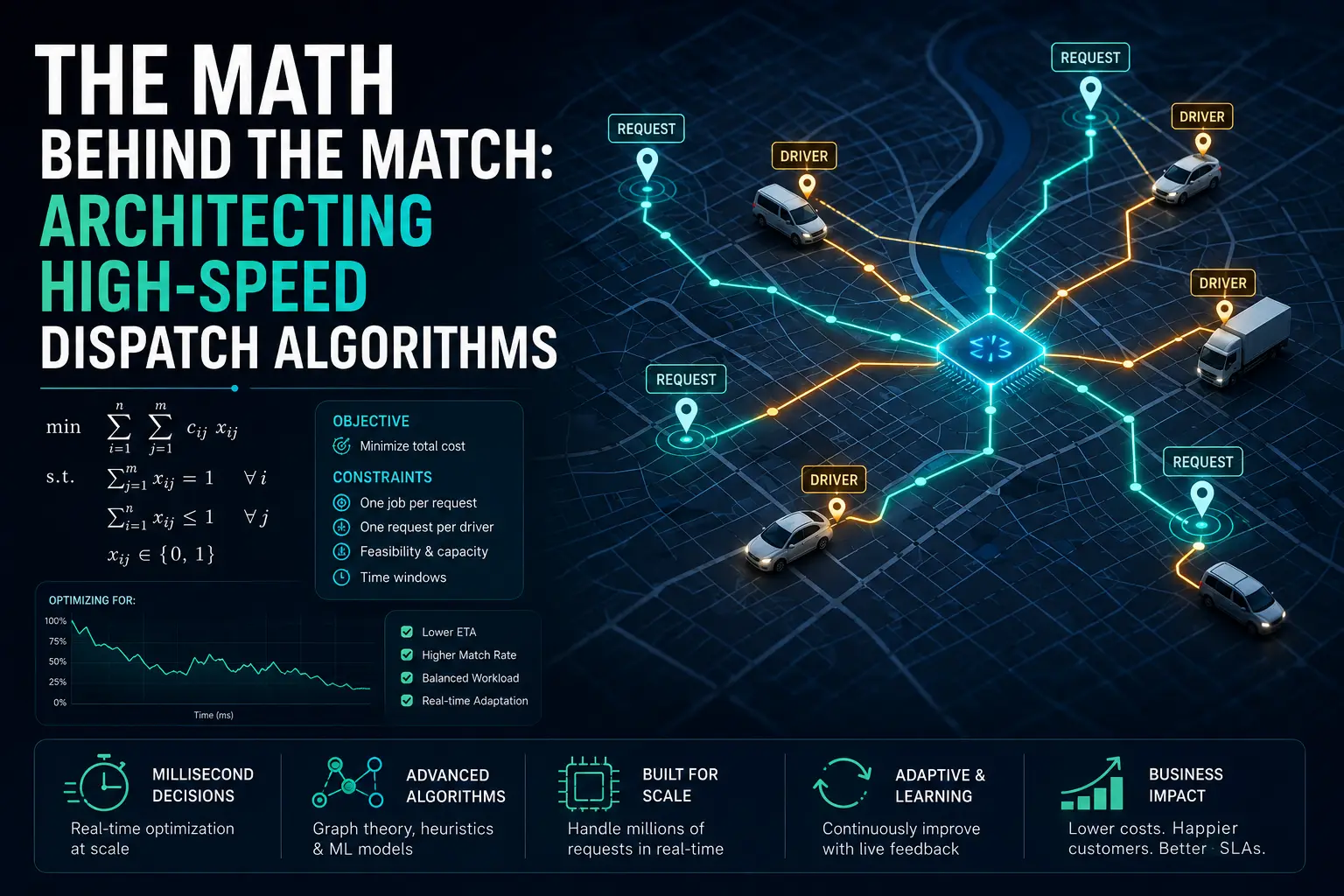
Route optimisation by itself optimises the wrong thing: a single vehicle's path with everything else fixed. Modern logistics platforms instead optimise the orchestration — which order goes to which vehicle, with which driver, on which lane, with which service-level promise — in a continuous loop.
#2Real-time decisioning, not nightly planning
Plans created at 2am for the next day's operations are obsolete by 9am. Real-time decisioning treats the plan as a living document, updated against telemetry, traffic, demand surges, and exceptions every few minutes. Reactive replanning is what separates AI-driven logistics from automated dispatching.
#3Why data quality determines model quality
The most valuable investment most logistics CTOs make is not in models — it is in the data platform feeding them. Address normalisation, accurate dwell-time measurement, GPS smoothing, and driver-input validation move the needle on model accuracy more than any new algorithm.
#4The dispatcher is the user, not the model
Dispatchers do not want a black-box plan; they want a confident recommendation with the reasoning visible and an obvious override path. We design our logistics products around the dispatcher's mental model: ranked options, justification, and rollback in one click.