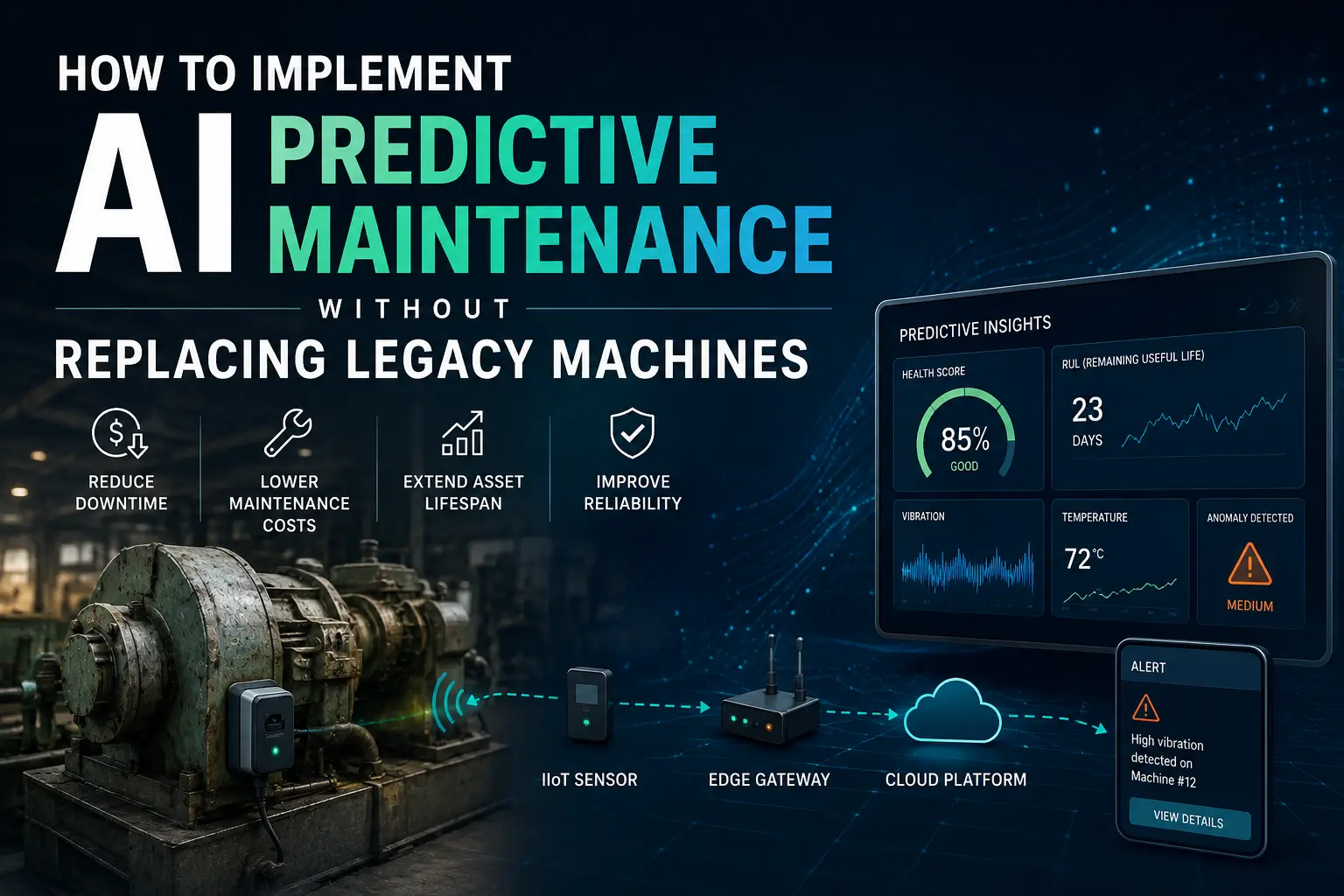
#1The myth of rip-and-replace
Vendors will tell you that predictive maintenance requires new equipment. It rarely does. Retrofit sensors, edge gateways, and signal taps from PLCs deliver enough data for excellent models — at a fraction of the capital cost.
#2Feature engineering — where the value really sits
Most of the lift in predictive maintenance comes from feature engineering, not model architecture. Vibration spectra, thermal gradients, current draw envelopes — these features need to be computed close to the source, named consistently, and tied to maintenance events with high integrity.
#3Model classes and their failure modes
- Anomaly detection — strong when failure modes are unknown but expensive to over-trigger.
- Survival models — strong for remaining-useful-life predictions but need good event labels.
- Supervised classifiers — strong for known failure signatures but need balanced training data.
#4Operationalising the model on the shop floor
A model is only as useful as the workflow it triggers. We integrate predictions directly into the CMMS so maintenance teams see ranked, actionable alerts with evidence — not opaque scores. Adoption depends on UX as much as on accuracy.