Surviving the OTA Duopoly: How to Architect High-Converting Direct Booking Engines
Direct bookings are still the highest-margin channel in travel. Winning them back from the OTAs is a product engineering problem as much as a marketing one.
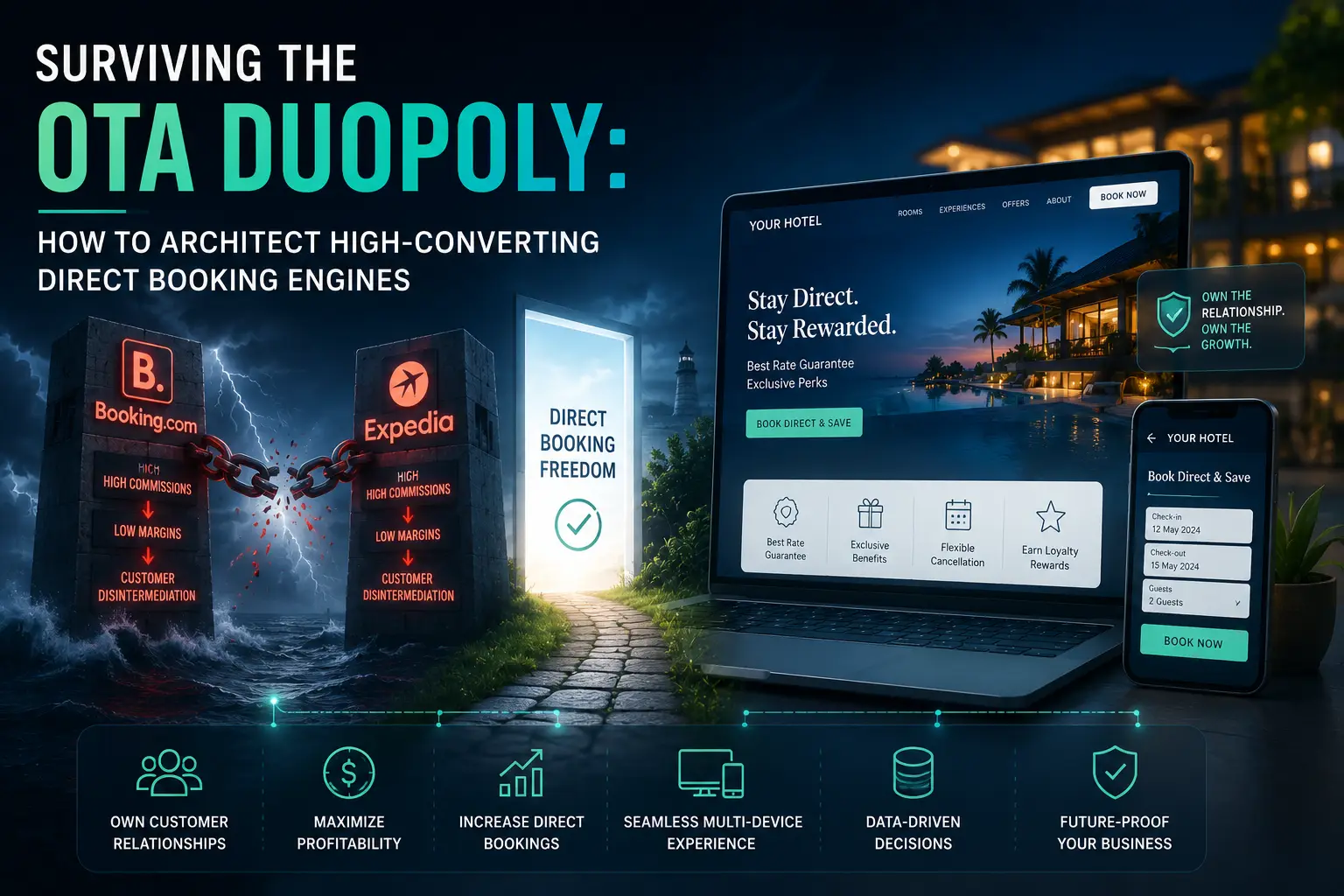
OTAs dominate the discovery layer. Hotels and tour operators that surrender on direct booking surrender margin permanently. The good news: the bar for a genuinely high-converting direct booking engine is achievable — but only with deliberate product engineering.
#1Why direct still matters more than ever
Direct bookings preserve margin, build loyalty data, and let operators control the relationship. With OTA commissions continuing to rise, every percentage point of direct share translates into outsized profit.
#2UX fundamentals OTAs are quietly investing in
- Instant availability and pricing on the first interaction.
- Friction-free guest checkout with stored preferences across visits.
- Honest comparisons with OTA pricing and benefits.
- Mobile experiences that load in under two seconds on common devices.
#3The tech stack that supports a high-converting booking engine
Resilient PMS integrations, real-time availability caching, payment orchestration with strong SCA compliance, and a search index built for travel intent — not generic site search. Each one is a quiet competitive advantage.
#4Personalisation without creepiness
Travellers welcome personalisation when it is clearly useful (preferred room types, accessibility needs, returning-guest greetings) and reject it when it feels invasive. We design personalisation around explicit user signals first, inferred signals second.
The takeaway
Direct booking is winnable, but only by operators who treat the booking engine as a real product — engineered, measured, and improved continuously.
Frequently asked questions
- Should we still list on OTAs?
- Yes, but treat OTAs as a marketing channel with measured ROI. The direct booking engine should be optimised independently.
- What conversion rate should we aim for?
- It varies by segment. Boutique hotels can exceed 5% on direct organic traffic with a well-tuned engine; large-chain conversion benchmarks sit lower but on much larger volumes.
Similar articles
 Travel & Hospitality
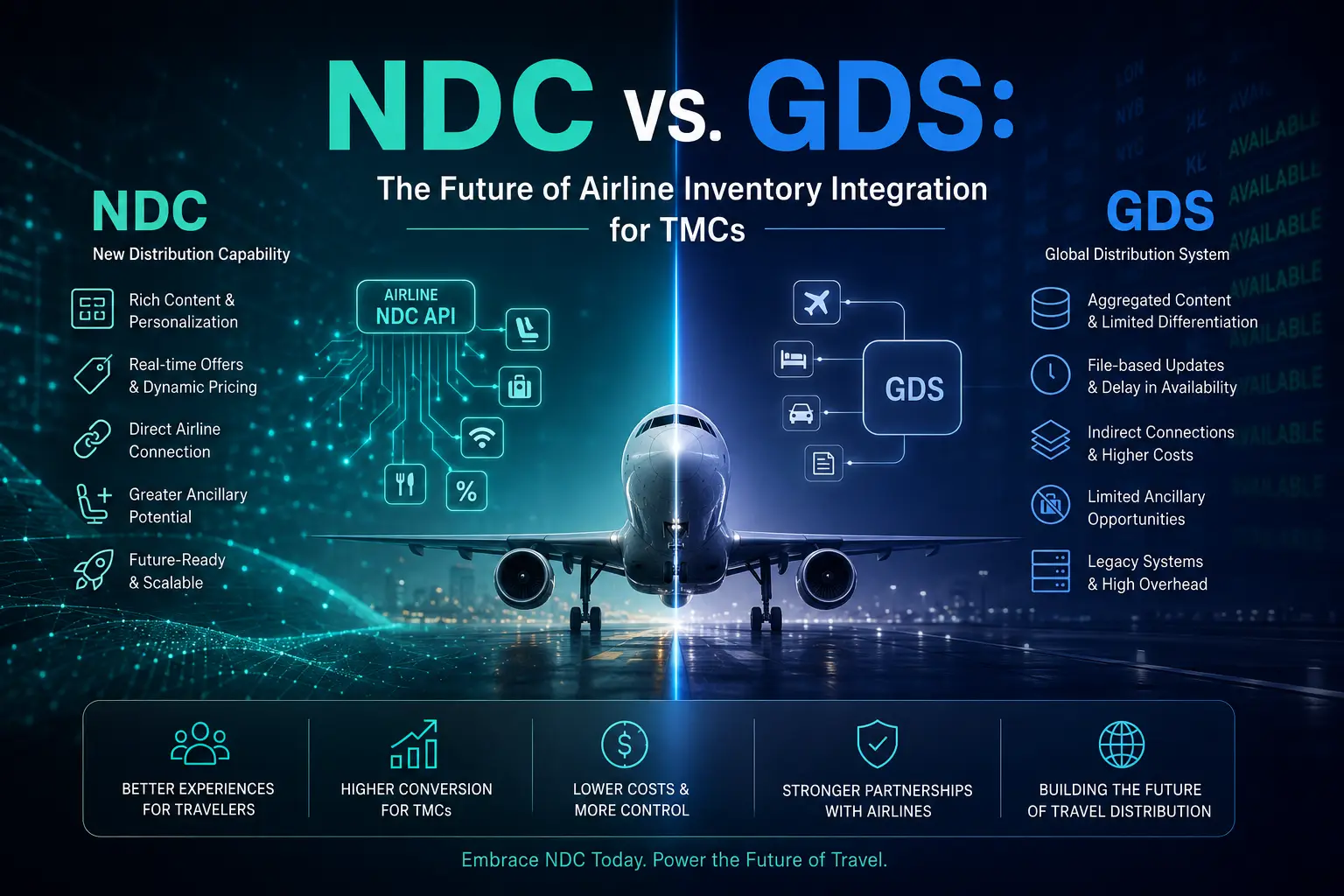
NDC vs. GDS: The Future of Airline Inventory Integration for TMCs
NDC is reshaping how airline inventory flows to travel management companies. Understanding the trade-offs is the difference between leading the shift and being left behind.
 Travel & Hospitality
Maximizing RevPAR: The ROI of Integrating AI Dynamic Pricing Into Your PMS
Dynamic pricing is the highest-leverage revenue management investment most hotels can make today — when the model is honest, integrated, and well-governed.
 Retail & E-commerce
Headless vs. Monolithic E-commerce: What CTOs Need to Know
Headless commerce is not a strict upgrade — it is an architectural trade-off. Here is how to make the call without falling for the marketing.