



EAST AFRICA / MOBILE + AI ENGINEERINGBest Mobile App Development Company in East Africa

Mobile app development services in East Africa for businesses building their next useful digital product. Start in Kenya or your priority market with VGD Technologies: iOS, Android, connected systems and practical AI solutions, shaped around the people who use them.Start with a focused plan for what your users need, what your team will operate and what a successful first release should achieve. Build a new service, improve an existing app or bring AI into a workflow.

Discover → Design → Build → Improve

YOUR PRODUCT
✓ iOS & Android
✓ Connectivity-aware design
✓ AI solutions
8+
Years In Custom Software Development
100%
Project Delivery Success Rate
50+
Full-Stack Developers & AI Engineers
10+
Countries Served Globally
8+
Years In Custom Software Development
100%
Project Delivery Success Rate
50+
Full-Stack Developers & AI Engineers
10+
Countries Served Globally
Fit2Flaunt logo
MyLab logo

Trusted By 50+ Global Innovators

5.0🌟 On ClutchTop rated Plus on Upwork

Calliope logo
Next Deavor logo

Mobile App Development Services in East Africa

From the first product decision to a release your team can run.

A useful app starts with a specific problem—whether customers abandon a booking because payment is confusing, field teams re-enter the same information, or staff spend hours answering routine questions. VGD Technologies brings mobile engineering, product design and AI solutions together around that problem to define the essential journey, connect it to your systems and plan the work needed to operate it after launch. Our mobile app development services in East Africa cover new products, improvements to existing applications and focused integrations, with Kenya as a central launch market and regional delivery planned country by country. Start with your audience, first launch market and business objective so we can discuss a suitable platform, scope and delivery approach without assuming every market needs the same product.
01

Custom mobile application development

Build around the way your business actually works. A customer app may need an internal approval dashboard, an inventory connection and exception handling before it can deliver its promised value. We map those supporting processes alongside the screens.

Our custom software development services connect the mobile experience to the operational tools behind it. The result should be a coherent workflow with clear ownership, rather than a collection of disconnected features.

02

Android app development

Android application development should account for the devices your intended users own, available storage and real network conditions. We define supported devices, permissions, background behaviour and practical performance targets during planning.

A field application might prioritise reliable data capture, while a shopping app may depend on fast browsing and straightforward checkout. Explore our Android app development services to discuss a native implementation or compare alternatives before choosing the stack.

03

iOS app development

An iPhone experience deserves deliberate design, accessible interactions and careful handling of platform permissions. We assess whether your project needs Apple-specific capabilities, subscriptions, location features or a companion experience for an existing service.

Our iOS app development services include planning for device coverage, release preparation and ongoing updates. Choosing iOS first should reflect your audience and product requirements, with a clear plan for any later Android release.

04

Cross-platform app development

Flutter and React Native can be useful when Android and iOS share most of their journeys. Shared code can reduce duplicated implementation, but it does not eliminate platform-specific testing or integration work.

We compare the approach against camera use, offline storage, background tasks, accessibility and maintainability. Cross-platform app development is a product decision as well as a technology decision: the team maintaining the application needs to understand the trade-offs and long-term dependencies.

05

Product design and MVP development

A first release should solve a complete, narrow problem. We can help map a user journey, prototype it and identify which assumptions need evidence before a larger build.

Our MVP development services focus on the smallest useful service, including the administration and support tasks it requires. A limited pilot can reveal confusing steps, missing information and operational bottlenecks while changes are still relatively inexpensive to make.

06

App modernisation and support

An existing product may need a targeted repair rather than a rebuild. We can discuss a technical assessment covering code, dependencies, integrations, release access and known issues.

Priorities might include reducing crashes, improving onboarding or replacing a fragile payment workflow. Agree the maintenance scope, escalation process and ownership of accounts before work begins. A mobile app development company should explain what can be reused, what needs investigation and which changes would introduce migration risk.

Mobile app development in Kenya, built around real customer journeys

Start with one market. Design a foundation that can expand.

If you are looking for app developers in Kenya, a useful first conversation goes beyond the number of screens to explore who completes the main task, which payment methods they expect, what happens when a connection drops, and how your team will resolve a failed order—shaping an application people can use and a business can support. For a Kenya launch, we assess M-Pesa payment integration, mobile onboarding, location requirements and language choices against your specific service. Nairobi may be your initial operational base, but the test group should reflect the actual customer population, representative devices and the real-world conditions in which the app will be used, avoiding treating a successful office demonstration as sufficient evidence for a public launch.
STEP 01

Save a task

STEP 02

Keep working

STEP 03

Sync & confirm

Illustrative offline workflow. Behaviour is defined per feature.

Make the first successful action easy

Registration should collect what the task needs, when it is needed. A customer browsing a catalogue may not need a full profile immediately. A staff member capturing a delivery may need secure access before seeing an address. We work through those differences in the design. Clear explanations, recoverable errors and visible progress help users finish a task without guessing. Measure completion of that task, rather than relying only on downloads or account registrations.

Plan mobile money integration as a complete workflow

Payment initiation is only one step. The application also needs to represent pending, confirmed, unsuccessful and disputed outcomes accurately. We discuss how the backend verifies provider responses, how repeated notifications are handled and how staff reconcile records. For Kenya, Safaricom’s Daraja platform is an official starting point for M-Pesa API evaluation. Provider onboarding, merchant eligibility, available products and production approval must be confirmed for the actual business account.

Build for interruptions without hiding uncertainty

An offline-capable app should make its state understandable. A saved draft is different from an accepted order, and an uploaded payment request is different from a confirmed payment. We define which actions can happen locally, which require connectivity and what users see while synchronisation is pending. Keeping an honest status visible reduces duplicate submissions and unnecessary support calls. These decisions belong in the initial scope because they influence data models, testing and interface design.

Expand from Kenya with a market checklist

Expansion should reuse the right foundations while allowing local differences. Review payment providers, currencies, languages, support arrangements, account requirements and data flows separately for each country. An integration approved for a Kenyan business is not automatically available elsewhere. We can structure configuration and release controls so a new market does not require unrelated changes to the whole product. The launch decision should still depend on validated local requirements and a team ready to support users.

Choose the right platform before committing your budget

Compare the user experience, engineering effort and ongoing operating model.

The best technical route is the one that supports the product’s priorities. Native apps, shared-code applications and mobile web experiences each have useful roles. We discuss the capabilities you need now, the expected audience and the people who will maintain the service. A mobile application development company should be able to explain that choice in business terms and identify what would cause it to be reconsidered.

Platform decisions at a glance
ApproachConsider whenPlan for
Native iOS / Android
Platform-specific capabilities matterSeparate platform work
Flutter / React Native
Most journeys are sharedDevice-specific testing and integrations
Mobile web
Immediate access from a link mattersBrowser capability limits

Native or shared code?

Native development can be appropriate when deep platform integration or distinct platform behaviour is central to the product. Shared code can suit a service with similar journeys on both operating systems. The decision should include the availability and quality of required libraries, the difficulty of testing integrations and the release process. A prototype of the riskiest capability can be more valuable than a lengthy feature comparison based on assumptions.

App, web portal or both?

An app may serve repeat customers or field staff, while a browser-based dashboard supports managers, partners and service teams. Some early products can validate demand through mobile web before adding store-distributed applications. We map the entire service so the customer experience and back-office work fit together. Consider sign-in, account recovery, notifications, reporting and content updates across all interfaces, rather than treating the dashboard as an afterthought.

AI app development that helps people complete useful work

Search, assistance and automation with clear limits and measurable value.

VGD Technologies works with AI solutions as part of its broader product engineering services. For an East African app, the useful question is which task AI could improve: finding the right information, organising incoming documents, answering a routine question or helping an employee review a record. We start with that task and assess data readiness, cost, accuracy and the consequences of an incorrect result. Our generative AI services can support conversations about assistants and knowledge-based experiences. A successful feature also needs ordinary product engineering: access control, error handling, sensible response times and a fallback when the model or network is unavailable, keeping the user’s main task available wherever possible so an optional AI feature does not become an obstacle to essential work.

AI chatbot development and knowledge assistants

A support assistant can help users find approved information about a service, product or policy. Its scope should be explicit, with a route to human support when the answer is missing or sensitive. We discuss the knowledge sources, update process and permissions before implementation. A customer-facing assistant must not reveal internal material simply because it can retrieve it. Evaluate realistic questions, incomplete requests and misleading inputs before deciding whether the experience is ready for release.

Intelligent automation for internal teams

Document sorting, draft summaries and request routing can reduce repetitive work when they are designed around a clear review process. Our intelligent automation solutions are relevant to workflows where staff need assistance without losing control of consequential actions. Decide which steps can be suggested, which can be executed automatically and which require approval. Keep an understandable record of actions so the team can investigate mistakes and improve the workflow.

Machine learning and recommendations

Recommendations or predictive features require suitable data and a meaningful evaluation method. Start with the decision being supported, the data available and the cost of a poor recommendation. A simple rule-based approach may be the better starting point when historical data is limited. We can discuss machine learning as the product matures, with feedback mechanisms and monitoring that help identify whether the feature is useful across the intended user groups.

Governance & Operations

Language evaluation, privacy and running costs

AI performance should be tested in the languages and writing styles your audience uses. Do not assume that a model’s general capabilities guarantee reliable results for every local task. Decide what information may be sent to an external provider and who can access stored conversations. Budget for usage limits, monitoring and model changes. A practical AI development company should discuss these operating responsibilities alongside the initial feature demonstration.

Mobile products for customers, teams and growing organisations

Illustrative use cases to shape your brief, not claims of local client deployments.

Retail and ecommerce app development

A retail app needs more than attractive product cards. Stock availability, delivery coverage, order changes and customer support all influence whether the purchase can be completed successfully. We can discuss catalogues, account journeys, payment connections and the administration needed to keep information current.

Explore

Logistics and field operations

Dispatch, delivery confirmation and field reporting often involve changing conditions. An app can help teams capture information at the point of work, but it should also handle incomplete addresses, unavailable recipients and delayed synchronisation. We discuss roles for drivers, dispatchers and managers together.

Explore

Financial services and member platforms

Member portals, payment-facing services and financial workflows require careful responsibility boundaries. We can discuss account access, transaction visibility, integration interfaces and administrative review. Your organisation and specialist advisers should establish the applicable permissions and obligations.

Explore

Healthcare and appointment services

Booking, reminders and care-team coordination can each involve different information and access requirements. We start by identifying the people who use the system and the records they need. Keep medical decision-making and professional responsibilities explicit.

Explore

Education, training and membership

Learning experiences benefit from clear progress, accessible content and predictable download behaviour. A training app may need saved lessons, assessments, reminders and a simple way for administrators to update material. We discuss device sharing, account recovery and content size with your audience in mind.

Explore

Tourism, bookings and community programmes

Booking and programme applications often connect a public-facing service with staff working behind the scenes. Clarify availability, confirmation, cancellation and communication before adding complex features. For community or NGO workflows, consider consent, staff permissions and field capture.

Explore

A clear process from discovery to regional rollout

Make decisions visible and validate the difficult parts early.

An effective delivery process gives you evidence of progress and a way to resolve uncertainty. We discuss the scope, decision-makers and review rhythm at the beginning. Demonstrations should show working journeys, not just attractive screens. Changes are expected during product development, but their effect on cost, timing and priorities should be understood before they are added to the release.

01

Define the first useful outcome

Describe the audience, problem and business measure. Identify the first country, the essential journey and the person responsible for product decisions. Bring existing research, workflows and system documentation where available. Discovery should expose assumptions about payments, data, operations and integrations. The output is a shared understanding of what must work, what can wait and what needs further investigation before a reliable estimate is possible.

02

Prototype and check assumptions

Create a realistic version of the core journey and review it with representative users and operational staff. Check wording, missing information, accessibility and recovery from mistakes. Technical investigation can run alongside design when an integration or device capability presents uncertainty. A prototype is a tool for learning; it should help remove ambiguity before the team spends more time building features that users may not need.

03

Build connected increments

Implement the application, backend and administrative tools in coherent pieces. Each increment should make a meaningful part of the service demonstrable. Agree review points and acceptance criteria so stakeholders can provide specific feedback. Track dependencies such as credentials, content and provider approvals. Clear communication about blocked work is as important as reporting completed tasks, especially when several organisations are contributing to the same launch.

04

Test the whole service

Test the successful journey and its common exceptions: dropped connectivity, expired sessions, repeated payment notifications and unavailable services. Include representative devices and accessibility checks. Operational users should practise the actions they will perform after launch, including correcting information and responding to enquiries. A mobile application development company should test how the service behaves when something goes wrong, not only whether the main screens appear correctly.

05

Launch, observe and improve

Prepare store accounts, support responsibilities, monitoring and a release checklist before the launch date. A limited rollout can reveal issues while the support load is manageable. Use agreed measures such as completed bookings, successful syncs or support requests to guide improvements. Confirm who can release fixes and how decisions will be made. Regional expansion then becomes a sequence of informed releases rather than a single oversized commitment.

Explore VGD’s product work

Review the craft, then discuss the evidence relevant to your project.

A portfolio helps evaluate design quality, technical craft and the types of digital experiences an engineering team delivers. VGD’s published work includes Fit2Flaunt and Calliope, featured as examples from the company portfolio rather than East African client projects. Visit our work and ask which aspects are relevant to your own product, such as content delivery, user journeys or ongoing product development. When comparing mobile app development companies, ask what the supplier actually delivered, how that experience relates to your requirements, and how integration complexity, backend architecture and release responsibilities were handled. The strongest comparison is based on relevant capability and a clear delivery arrangement, rather than a long list of unrelated logos.

Fit2Flaunt project shown in VGD’s portfolio
FITNESS / CUSTOMER EXPERIENCE

Fit2Flaunt

A fitness product that connects guided activity with a mobile experience. For a related brief, we can discuss content discovery, programme navigation and the technical work behind a usable customer journey.

Reviewing a real product is most useful when it leads to specific questions. Ask which components were delivered, what the constraints were and which parts of the approach could apply to your own application.

Calliope project shown in VGD’s portfolio
CONTENT / AUDIO AI

Calliope

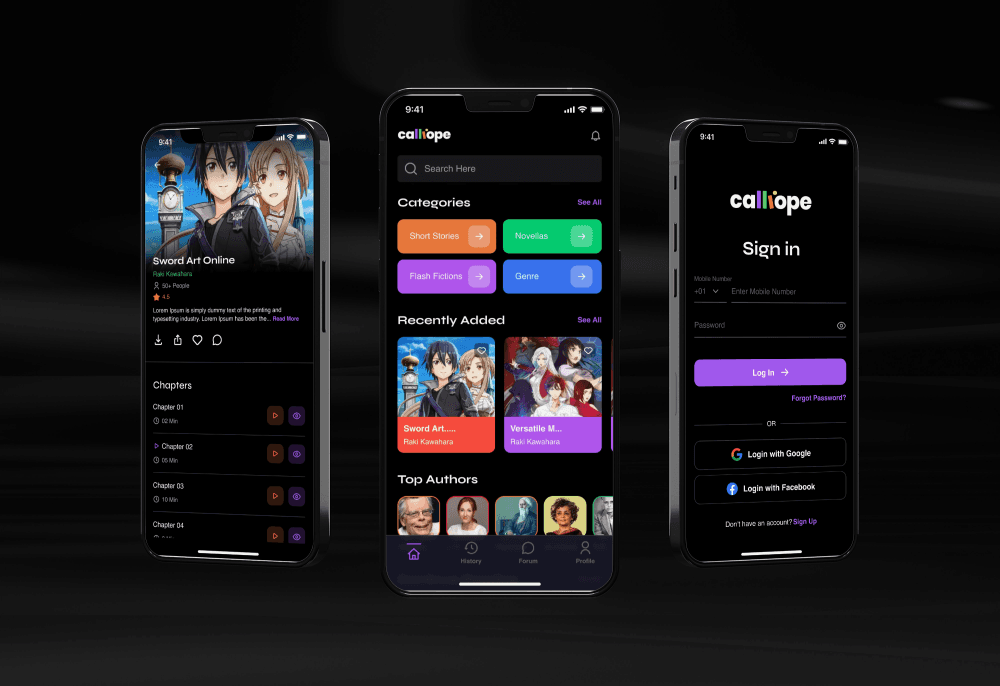
A reading and content experience featured by VGD with audio AI capabilities. It provides a starting point for conversations about media interfaces, content delivery and intelligent functionality inside a mobile product.

We use portfolio discussions to identify relevant capabilities and uncertainties. Your requirements determine which elements belong in a new solution and which need separate validation before development.

Explore VGD's portfolio to see full case studies, technical architecture, and design patterns.

Explore VGD’s portfolio ↗↗

What determines app development cost in Kenya and East Africa?

A useful estimate starts with a defined journey and explicit assumptions.

There is no responsible single price for every app. A focused booking application and a multi-role regional platform have different delivery requirements, even if both have a small number of screens. We estimate against scope, integrations, platforms, data handling, operational tools and release needs. Tell us your budget range if you have one; it helps shape an achievable first phase and identify which requirements need prioritisation.

What belongs in the build estimate?

Include design, application engineering, backend work, administrative tools, testing and release preparation. Payment integrations may require additional investigation, and AI features need evaluation as well as implementation. Migration from an existing system can introduce work that is invisible in a screen list. Ask each mobile app development company to state assumptions, exclusions and client dependencies so the proposals can be compared on the same basis.

Where are you starting?

Bring the problem and your priorities

Outline your audience, essential journey, launch constraint and business goal. We can discuss the discovery work needed to define a useful first release.

What continues after launch?

Hosting, third-party services, messaging, monitoring, maintenance and AI usage can create recurring costs. Store account fees and provider charges should be considered separately where applicable. Clarify who owns each account and who pays each supplier. Agree a commercial currency and any exchange-rate assumptions rather than assuming one currency will suit all markets. A useful budget separates implementation, operation and planned improvements, with room for learning after the first release.

How can you reduce avoidable rework?

Resolve the highest-risk uncertainties early. Validate the essential journey, confirm integration access and name a decision-maker who can resolve questions. Keep the first launch focused on a defined market and audience. A phased approach can make costs more manageable without leaving the core service incomplete. Our MVP planning approach can help distinguish essential functionality from features that should wait for evidence.

Design for trust, access control and operational clarity

Make data responsibilities part of the project conversation.

Before implementation, map what information the application collects, where it travels and who needs access. Identify external services, analytics tools and AI providers as part of that map. Your organisation should establish the relevant country and sector requirements with qualified advisers. We can discuss engineering controls that support the agreed requirements, but a hosting choice or a security feature alone cannot establish compliance across the region.

Keep access proportionate to the role

Customers, field staff, support agents and administrators should see the information required for their tasks. Review account recovery and privileged actions as carefully as ordinary sign-in. Important changes may need logging or approval. Plan how access is removed when someone leaves a role and how shared devices are handled. The simplest interface still needs a carefully controlled backend; hiding a button is not an access-control strategy.

Plan for incidents and ownership

Confirm who owns source code, infrastructure accounts, signing credentials and operational documentation in the agreement. Define how an issue is reported, prioritised and escalated. Backups need a recovery plan and named responsibility. During handover, make sure the operating team understands how to release changes, investigate failed jobs and manage provider access. These decisions help protect continuity when staff, suppliers or product priorities change.

Choose a mobile app development company for your actual requirements

Look for fit, useful questions and transparent delivery commitments.

The best mobile app development company for your project will depend on the service you are building, the available budget and how you want to collaborate. Compare suppliers using a shared brief. Ask how they would handle your difficult integration, your first launch market and your post-launch responsibilities. A useful response should explain uncertainties and choices rather than promise every feature on an arbitrary deadline.

Bring a brief that helps us help you

Include your first country, target users, core task, existing systems and desired launch window. Describe the commercial or operational result you want to improve. If you already have an application, share the known issues and available documentation rather than sending sensitive credentials through an enquiry. This information helps us discuss a suitable next step, whether that is discovery, a focused integration or a broader product build.

Collaborate across markets with clear ownership

Remote collaboration works best with named decision-makers, agreed meeting windows and written outcomes. Your team contributes market knowledge, operational requirements and local stakeholder access; the delivery team contributes design and engineering. Discuss review availability and escalation expectations before the project starts. Our regional coverage describes services delivered through international collaboration. It does not imply a physical VGD office or a local delivery team in every country shown below.

Explore your East African launch market

Kenya at the centre. A practical path to regional expansion.

Choose a country to explore your starting point and add it to your project enquiry. We plan around the audience, providers and operating requirements of each market. Country cards describe remote service availability for discussion, rather than local offices or completed client engagements.

YOUR MARKET, YOUR PRIORITIES

Building an app in Kenya?

Start with your customer journey, M-Pesa requirements and support workflow. Validate the first release with the users and devices you intend to serve.

Discuss your Kenya project ↗

These 12 selected service markets fall within the UN M49 Eastern Africa grouping. This is not a complete list of Eastern Africa or a list of East African Community members.

Planning mobile app development in East Africa?

We can discuss product discovery, interface design, Android and iOS engineering, cross-platform development, backend integration, AI features and post-launch improvements. The agreed scope depends on your existing systems, first country and essential user journey. Start with our mobile app development services and explain the business outcome you need. We will identify which parts belong in the first phase and which require investigation before an estimate.

Compare providers against the same brief: users, first market, core workflow, integrations, budget and operating responsibilities. Ask for relevant delivery evidence and an explanation of technical trade-offs. Confirm source-code ownership, account access and support terms in the agreement. Review VGD’s portfolio as one input to that assessment. The right fit depends on your project; a broad regional claim or repeated keyword is not evidence of capability.

Yes. If you are comparing app developers in Nairobi with international teams, we can discuss a Kenya-focused product with your team through international remote collaboration, including customer journeys, backend systems and payment integration requirements. Share whether your users are concentrated in Nairobi or spread across other locations, as this affects research and testing. Use our contact page to describe the first release. Service coverage does not imply a VGD office in Nairobi or an existing Kenyan client deployment.

We can assess M-Pesa integration as part of the project, including payment initiation, status updates, reconciliation and exception handling. Your business needs the appropriate provider account, approvals and credentials for the selected product. The implementation should be tested against the provider’s current requirements. Our API development and integration services provide the relevant starting point. We do not assume that one country’s payment setup can be reused unchanged in another market.

Choose based on your actual audience, required device capabilities and available budget. An Android-first launch, an iOS-first product or a shared-code application can each be appropriate. Validate the decision with user information rather than broad regional assumptions. Compare our Android services and iOS services, then discuss whether the same journeys are needed on both platforms and which features could complicate a shared implementation.

A useful estimate requires a defined scope. Platforms, user roles, integrations, administrative tools, migration and testing all influence effort. AI evaluation and provider onboarding may add dependencies. Separate the initial build from hosting, usage charges and ongoing support. Our MVP development services can help narrow the first release. Share a budget range and target outcome so we can discuss practical options rather than a price disconnected from your requirements.

Timing depends on scope readiness, integration access, design decisions, testing and external review processes. A prototype, a limited pilot and a public regional release are different milestones. We discuss a delivery plan after identifying dependencies and acceptance criteria. Store reviews and payment-provider approvals should be treated as external dependencies. Bring your target date to the project conversation so the team can assess what fits and what may need to move into a later phase.

Some functions can be designed to work locally and synchronise later, while others require an online confirmation. We define this feature by feature. A saved form, a submitted order and a confirmed payment should have different visible states. Our mobile engineering services can support that planning. Testing must include interrupted uploads, repeated requests and conflicting updates so users understand whether their work is saved, pending or complete.

Yes, we can discuss AI chatbot development, knowledge assistants and automation features around a defined use case. Start with the information sources, intended users and situations that require human review. Our generative AI services are relevant to those projects. We also plan access controls, evaluation, fallback behaviour and recurring usage costs. A convincing demonstration is a starting point; production readiness depends on how the feature behaves with real and difficult requests.

Multilingual capability must be evaluated for the languages, terminology and tasks your users actually need. We can discuss representative test questions, human review and fallback options rather than assume identical accuracy across languages. A product may need translated interface text as well as an AI feature, and those are separate workstreams. Start with our AI solutions and identify the first audience so language evaluation can be included in the project scope.

Yes. We can discuss remote delivery for teams targeting these markets, with separate requirements for payments, support, language and operations. Country selection does not mean the same integrations or commercial arrangements apply everywhere. Use the country cards to add your target market to the enquiry, or contact VGD directly. Describe the first launch country and any later expansion plans so the architecture and release sequence can be considered together.

This page includes Kenya, Uganda, Tanzania, Rwanda, Burundi, South Sudan, Somalia, Ethiopia, Mozambique, Malawi, Zambia and Zimbabwe from the selected coverage list. It follows UN M49 Eastern Africa grouping for that list, rather than treating it as an East African Community membership list. It is not exhaustive regional coverage. Discuss your market through our contact page; delivery feasibility, third-party availability and project requirements are assessed individually.

We can assess the available interfaces, documentation, data ownership and authentication requirements before proposing an integration. A connection may need error handling, synchronisation rules and monitoring beyond the initial data transfer. Read about our API integration services. Share the system names and the workflow you want to connect, but avoid sending production credentials through an initial enquiry. Access should be arranged securely during an agreed technical assessment.

We can discuss a review of its code, dependencies, release setup, integrations and known issues. That assessment helps determine whether a focused improvement, staged modernisation or replacement is appropriate. Our custom software engineering services support this conversation. Availability of source code and account access matters. We would first identify the constraints and risks rather than promise a takeover timeline before understanding the existing application.

Ownership, licensing, repository access and third-party accounts should be specified in your commercial agreement. Support also needs a defined scope, contact route, response expectations and release responsibilities. Ask these questions before commissioning the build. When you discuss your project with VGD, explain whether you have an internal technical team and what help you expect after launch. That makes it easier to agree a workable handover and maintenance arrangement.

Include your target country, audience, essential task, current systems, product stage and desired launch window. Add a budget range if available and explain how you will judge success. For AI work, identify the task and information sources without sending private datasets. Use the enquiry form to prepare an email draft or visit our contact page. A focused brief helps us ask useful questions and propose a suitable next step.

Give your next app a clear direction.

Tell us who it is for, which task matters most and where you need help. We will discuss a practical starting point for your product.

Start your project conversation

* Takes less than 60 seconds.