SOUTH AFRICA / MOBILE + AI ENGINEERINGBest Mobile App Development Company in South Africa

Mobile app development services for South African businesses ready to turn a useful idea into a dependable product. VGD Technologies connects strategy, design, iOS, Android and practical AI solutions around your customers and your goals.Build a new service, improve an existing app or bring AI into a workflow. Start with a focused plan for what your users need, what your team will operate and what a successful first release should achieve.

Discover → Design → Build → Improve

YOUR PRODUCT
✓ iOS & Android
✓ Connectivity-aware design
✓ AI solutions
8+
Years In Custom Software Development
100%
Project Delivery Success Rate
50+
Full-Stack Developers & AI Engineers
10+
Countries Served Globally
8+
Years In Custom Software Development
100%
Project Delivery Success Rate
50+
Full-Stack Developers & AI Engineers
10+
Countries Served Globally
Fit2Flaunt logo
MyLab logo

Trusted By 50+ Global Innovators

5.0🌟 On ClutchTop rated Plus on Upwork

Calliope logo
Next Deavor logo

Mobile App Development Services in South Africa

A clear plan for the product and the business behind it

VGD Technologies brings design, mobile engineering and AI capabilities together to help South African businesses turn a product idea into a usable service. Our mobile app development services cover discovery, interface design, iOS and Android delivery, backend connections, testing and release preparation. Start with a focused customer journey, then expand around evidence from real use. Mobile app development services in South Africa should reflect the intended audience, its connectivity needs and the processes your team can support.
An application should make something meaningfully easier. That might be ordering supplies, booking an appointment, checking a delivery, accessing learning materials or completing an inspection. We look at the people, decisions and information involved before proposing screens. This helps your team understand what the first release needs and what can wait.
If you are comparing a mobile app development company in South Africa with an international partner, delivery arrangements matter. VGD is based in India and works with clients internationally. We support South African projects through agreed collaboration hours, documented decisions and clear responsibilities. This page describes our service coverage; it does not represent a South African office.
YOUR PRODUCT

What do you get from a complete app engagement?

A defined scope, a design direction, working software and a plan for operating it. Depending on the agreement, your project can include an admin dashboard, integrations, analytics, AI features, store submission assistance and ongoing maintenance. Each deliverable should have an owner and a clear acceptance condition.

Our mobile application development services connect the customer-facing experience to the systems your business relies on. A booking is only useful when availability is accurate. A checkout needs a reliable payment record. A field report needs to reach the right person. We plan these connections early so your launch is useful beyond the demonstration.


Mobile app development services, shaped around your next release

Strategy, design and engineering in one connected scope

01

Product discovery and app strategy

Before development begins, we help define the audience, the problem and the smallest valuable release. Discovery can include stakeholder conversations, workflow mapping, a review of existing systems and a prioritised backlog.

We identify assumptions that need testing, such as whether customers want an app or whether a mobile website already solves the task. A mobile app development company should help you make that distinction. You receive a clearer basis for estimating effort, choosing technology and deciding which features deserve investment.

02

Custom Android app development services

Android projects need a device strategy as well as an interface. We plan screen sizes, operating-system support, permission requests and behaviour when a connection drops. Your first release may include account access, product browsing, bookings, notifications or a field workflow.

Our Android engineering services connect these experiences to reliable APIs and administrative tools. Testing should reflect the devices your audience actually uses, including lower-specification devices where relevant, instead of relying only on a recent flagship phone.

03

iOS app development for iPhone and iPad

An iOS application should feel comfortable within the Apple experience while expressing your brand. We can plan native interfaces, secure account access, notifications and relevant device integrations around the product requirements.

Consider accessibility, interrupted sessions and the information a reviewer needs to assess the app. Our iOS app development services support the journey from feature definition to release preparation. Selecting an Android app development company or an iOS specialist starts with the same question: can they explain how the whole product will work?

04

Flutter and React Native applications

Cross-platform delivery can be useful when iOS and Android share most of their journeys. Flutter and React Native support shared application code, but the best choice depends on your integrations, existing skills and required device features.

We examine platform-specific behaviour before recommending a framework. A mobile app development company should explain where sharing code saves effort and where separate work remains. Plan time for real-device testing on both platforms, different permission flows and independent store releases even when much of the implementation is shared.

05

Mobile UI/UX and interactive prototypes

Design gives your team something concrete to evaluate before implementation. As part of our mobile app development services, we map the main journeys, then develop layouts, interaction states and a consistent component system. Empty results, validation errors and unavailable services deserve as much attention as successful screens.

Prototypes help stakeholders see whether customers understand the next step. We also consider readable type, contrast, touch targets and keyboard behaviour. A useful design handover explains the rules behind each screen so developers can preserve the experience when real data and unusual conditions arrive.

06

Backends, integrations and admin tools

The application is one part of a wider service. Our mobile app development services connect it to the data, permissions and business processes that make it useful. This may include a customer portal, an operations dashboard, inventory, a CRM or a booking engine.

Our API development and integration work defines how information moves and what happens when a dependency fails. Good software and app development keeps financial records, customer status and operational decisions consistent across systems, with appropriate access for each role.

Mobile app development for South African users

Connectivity, language and everyday tasks influence the experience

STEP 01

Save a task

STEP 02

Keep working

STEP 03

Sync & confirm

Illustrative offline workflow. Behaviour is defined per feature.
Offline-First Architecture

Keep useful tasks available when connectivity changes

Your users may move between strong Wi-Fi, mobile data and unreliable coverage. The right response depends on the task. A catalogue might use cached information; a field report might save a draft; a payment must show whether its status is confirmed. We define these behaviours explicitly. Offline support should never imply that a transaction succeeded when the server has not accepted it.

For field operations, we can plan local storage, an upload queue, retry behaviour and conflict handling. Users should see what has synced and what still needs attention. For customer apps, lighter images, sensible pagination and restrained background activity help reduce unnecessary waiting. Your mobile app development company should include these conditions in acceptance criteria, then test them before release.

Choose languages from audience research

A national audience is not a single language group. Start with the people you serve and the journeys they need to complete. English may be appropriate for an initial release, while isiZulu, isiXhosa, Afrikaans or other languages may matter for particular audiences. Translation choices should follow research rather than assumptions about an entire city or province.

We plan adaptable layouts, language resources and review workflows so language expansion does not require rewriting the interface. Human reviewers should check meaning, terminology and cultural context, especially for important instructions. AI-assisted translation can support a workflow, but it should not replace validation for payments, health information or contractual wording. The same language decisions apply to notifications, emails and support materials.

Make local details feel familiar

Agree how prices, dates, telephone numbers and addresses should appear. If your service charges in rand, display ZAR clearly wherever ambiguity is possible. Define delivery areas and service availability before customers commit to an order. Location permission should have a clear purpose and a useful fallback when somebody declines it. These details make a product easier to trust without filling it with unnecessary requests for personal information.

Mobile app development: choosing your platform

A practical comparison before committing the budget

A mobile development company should connect the platform choice to your audience, required capabilities and maintenance plan. Native, cross-platform and browser-based products can all be appropriate. The decision becomes easier when you separate essential functionality from preferences and identify the riskiest technical assumption first.

Platform decisions at a glance
ApproachConsider whenPlan for
Native iOS / Android
Native specialist
Platform-specific capabilities matterSeparate platform work
Flutter / React Native
Shared codebase
Most journeys are sharedDevice-specific testing and integrations
Mobile web
Web browser
Immediate access from a link mattersBrowser capability limits

Native applications

Native iOS or Android can suit products that depend heavily on platform-specific features or require detailed control over interaction and performance. Separate codebases allow platform-specific decisions, but they also create separate implementation and maintenance work. Consider how frequently the product will change and whether your budget supports parallel delivery. A short technical prototype can be more informative than a broad claim that one approach is always faster.

Shared mobile applications

A shared implementation is often worth assessing when both platforms need similar screens and business rules. It can simplify parts of the development workflow, while specialist integrations may still require native work. Agree how plugins will be maintained and how platform updates will be tested. Ask a mobile application development company to show where the common code ends and which components create separate obligations.

Mobile web and supporting portals

Some journeys work well in a browser, especially when occasional visitors need immediate access from a link. Other services benefit from a mobile app alongside a web dashboard for administrators or business customers. We can connect custom software development with the mobile interface so permissions and business rules remain coherent. Web and app development should share a product plan even when the interfaces serve different roles.

AI and mobile app development, built around useful tasks

Start with a useful task, then evaluate the model

VGD combines application engineering with generative AI development and automation capabilities to assess conversational support, document assistance, recommendations and operational workflows within your app. The starting point is a measurable problem—which task takes too long, which question repeats, or which information is difficult to find? An AI development company should define how a feature behaves when the model is uncertain or a source is missing. Useful AI needs a reliable surrounding system: permissions, approved information, evaluation examples, monitoring and an escalation path to human help, ensuring every workflow is scoped with clear operational boundaries rather than assuming every app needs an unsupervised chatbot.

Conversational AI and knowledge search

A support assistant can help users find answers from approved product information, service policies or account-specific data. Retrieval-augmented generation connects answers to relevant sources, while access controls decide what each person can retrieve. We plan how the assistant handles incomplete questions, conflicting documents and requests outside its remit. The interface should make escalation easy and avoid presenting an uncertain response as a confirmed business decision.

AI agents and intelligent automation

An assistant that takes action needs stronger controls than one that only suggests an answer. An AI agent might prepare a service request or draft a follow-up, while a human approves a sensitive change. We define allowed actions, approval points and an audit trail. Explore intelligent automation solutions when the aim is to reduce repetitive work across your app and internal systems.

Recommendations, documents and predictive analytics

Machine learning can support recommendations or forecasting when suitable data exists. Document workflows may extract fields for review, summarise records or make approved content easier to search. Each use case needs a baseline, representative evaluation data and a definition of acceptable errors. Your AI developer should assess data readiness before recommending a model. A simple rules-based feature may be the stronger first release when data is limited or the decision must be fully predictable.
Governance & Operations

Evaluate quality, privacy and operating cost

AI development continues after a demonstration works. We examine response quality, latency, model usage, access boundaries and changes to the source material. Testing should include unclear questions, unsupported requests and attempts to expose information the user should not see. Define spending controls and a fallback if the model service is unavailable. This gives your business a way to improve the feature using evidence rather than relying on an impressive example conversation.

Mobile app development for the way your industry operates

Illustrative use cases, shaped to your actual workflow

Retail and ecommerce

Ecommerce mobile app development can connect discovery, repeat ordering, loyalty and fulfilment. The difficult parts often sit behind the purchase button: stock changes, delivery availability, payment confirmation and returns. We map these transitions so customers receive useful updates and staff can resolve exceptions. Explore our retail and ecommerce capabilities for related platform needs. A mobile app development company should understand the operational handoffs that keep an order moving after checkout.

Explore

Financial services and business payments

Financial journeys require clear states, controlled access and reliable records. A product might support applications, account servicing or a payment-related workflow, subject to the provider’s authorisation and compliance requirements. We define how the app communicates with approved systems and where sensitive decisions remain with authorised personnel. Our fintech and banking work can support the engineering discussion; the relevant business and compliance specialists must determine the obligations for your particular service.

Explore

Healthcare and appointment services

An appointment app can reduce administrative friction through booking, reminders and approved information. We clarify who can view each record and how changes reach the relevant team. Sensitive information requires deliberate handling, and a prototype should avoid unnecessary real patient data. See our healthcare and pharma capabilities. An AI feature in this context should have a carefully defined purpose and oversight; administrative assistance is different from making a clinical judgement.

Explore

Logistics and field operations

Drivers, technicians and supervisors need reliable task states. An app can support assignments, proof of completion, photographs, location updates and exception reporting. We plan offline capture and synchronisation where appropriate, then connect the mobile record to an operations view. A supervisor should understand whether a task is completed, delayed or waiting for confirmation. The aim is a dependable shared record that reduces repeated calls and manual reconciliation.

Explore

Education, memberships and communities

Learning and membership products need accessible content, straightforward account management and useful progress information. We can plan content delivery, saved activity, subscriptions and moderated interaction around your operating model. Consider what happens when a learner changes devices or a subscription expires. Downloadable materials may need access controls and clear storage limits. A product that is easy to administer gives your team more time to improve its content and support its users.

Explore

Travel and service bookings

Booking products bring together availability, customer details, payments and changes to a reservation. We help define the source of truth and the rules for confirmations, cancellations and refunds. A mobile app development company should test what happens when two users select the same slot or a payment returns late. Clear status messages and support routes matter as much as attractive destination images or service cards.

Explore

Explore the work behind the conversation

Existing VGD portfolio examples

Before selecting a partner, review work you can discuss in detail. VGD’s public portfolio includes Fit2Flaunt, a fitness platform, and Calliope, an interactive reading experience, providing a starting point for conversations about content, mobile interfaces and product journeys (not presented here as South African client projects, and their relevance to your scope should be assessed directly). When evaluating a mobile application development company, ask how it would handle the challenges closest to your project, which parts of a comparable engagement we delivered, what constraints shaped the solution and how the product was maintained. Screenshots communicate the interface; an in-depth technical conversation explains the decisions and architecture behind it. Visit VGD’s project portfolio and bring the features you would like to explore; a dependable mobile app development company distinguishes demonstrated experience from an unverified capability.

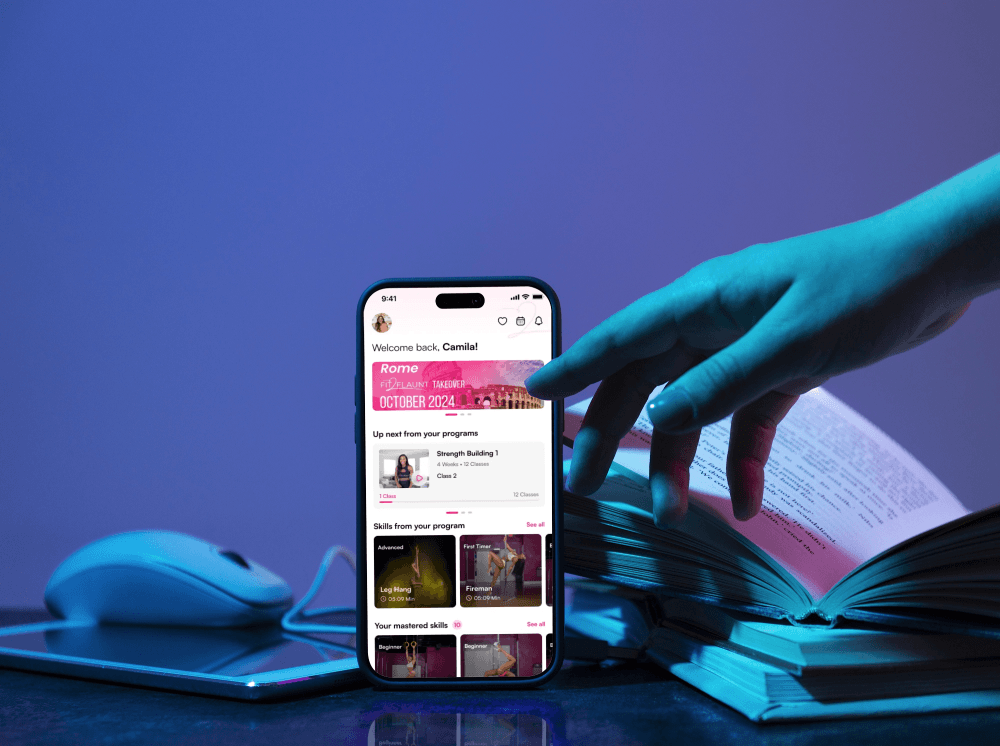
Fit2Flaunt project shown in VGD’s portfolio
FITNESS & CONTENT

Fit2Flaunt

A mobile fitness experience focused on personalized workout journeys. VGD’s published portfolio demonstrates clean mobile interfaces, content access, and routine building.

For a similar product, the discussion starts with content access, session discovery, and the routine users should build around the application.

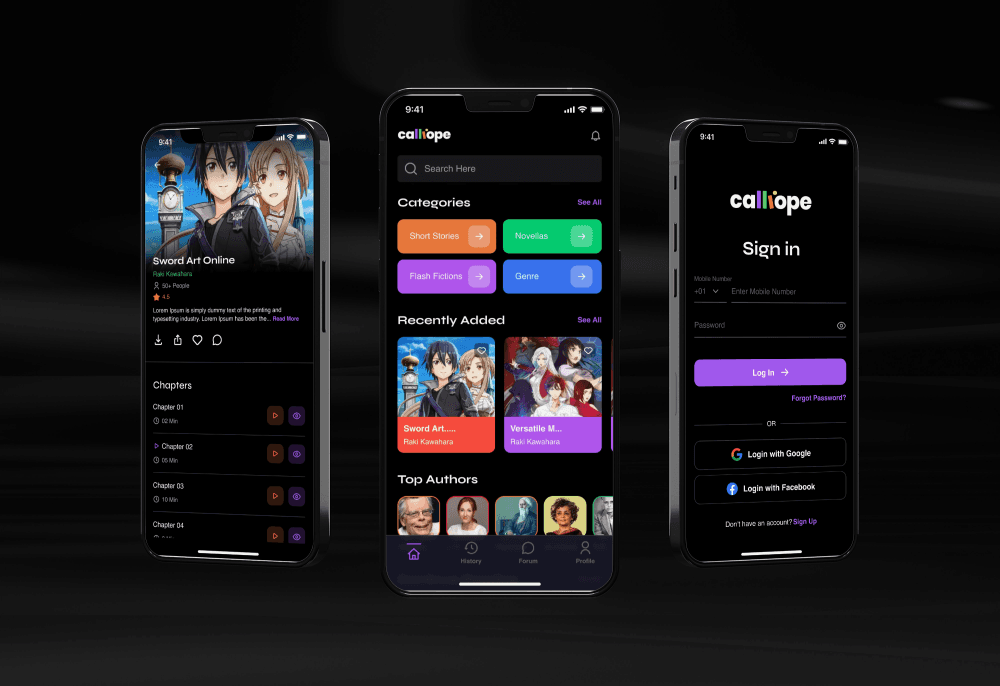
Calliope project shown in VGD’s portfolio
READING & DIGITAL EXPERIENCES

Calliope

An interactive reading experience combining animated ebook content with social elements. Products like this bring content presentation, navigation, and performance together.

Ask us about the engineering decisions relevant to your own digital media experience, user engagement, and platform responsiveness.

Visit VGD’s project portfolio to explore the technical architecture, live applications and interface solutions we have engineered.

Explore VGD’s portfolio↗

A mobile app development process with clear decisions

Understand what happens before the next commitment

01

Discover and prioritise

We begin with the audience, the problem, the intended business result and the constraints. Existing documents, customer feedback and system access help establish the starting point. The output is a prioritised scope with assumptions and unanswered questions. Your delivery team should identify the risks that could change the estimate instead of hiding uncertainty inside a fixed number.

02

Design and validate

We map key journeys and create an interface direction that stakeholders can review. Prototypes make it easier to discuss onboarding, navigation and task completion before implementation. We record feedback and distinguish necessary changes from optional enhancements. This phase should also identify empty states, failure states and accessibility considerations so the approved design describes more than the ideal path.

03

Build and demonstrate

Implementation proceeds through agreed priorities with regular demonstrations. Your team can assess working journeys, raise questions and approve decisions while the product is taking shape. We connect the interface, backend and integrations incrementally. A mobile app development company should make progress visible through usable software and documented decisions, with a clear process for changes that affect timing or budget.

04

Test and prepare release

Testing covers the agreed devices, core journeys, permissions, integration failures and recovery behaviour. Business users validate the workflows they will operate. We prepare release materials and identify responsibilities for accounts, approvals and support. Store review is an external process, so submission assistance should not be confused with a promise of approval on a specific date.

05

Launch and improve

After release, use monitoring and user feedback to identify issues and prioritise the next improvements. Agree which incidents require urgent attention and which changes belong in the planned backlog. A mobile app development company should explain how handover, support and future development fit together. A successful launch is the beginning of an operating product, not the end of its responsibilities.

What affects mobile app development costs?

Estimate the scope before choosing a price

The cost depends on the work required to make the product usable and dependable. Screens alone are a poor measure. Roles, integrations, offline behaviour, data migration, AI capabilities and testing can change the effort substantially. A simple customer interface may depend on a complex back office. We prepare estimates around agreed requirements rather than presenting an unsupported universal South African price range.

Compare the same deliverables

When comparing mobile app development companies, request the same assumptions from each supplier. Does the proposal include design, an admin portal, backend work, testing, deployment and documentation? Which external subscriptions are separate? What happens when an integration is unavailable or a requirement changes? A lower estimate may simply exclude work that another proposal includes. The comparison is only useful when the scope and responsibilities are visible.

Where are you starting?

Bring the problem and your priorities

Outline your audience, essential journey, launch constraint and business goal. We can discuss the discovery work needed to define a useful first release.

Budget for operation as well as delivery

Plan for hosting, third-party services, store accounts, monitoring, maintenance and customer support. AI features can create usage-based charges, so define limits and expected traffic before launch. Confirm the quotation currency, applicable taxes and any exchange-rate assumptions in the commercial agreement. A mobile app development company should help separate one-off implementation costs from recurring expenses so you can assess the product’s longer-term economics.

Choose a starting point that reduces uncertainty

A new idea may need discovery and a prototype. A well-defined product can move into a scoped build. An existing app may need a technical review before somebody can estimate a takeover responsibly. Our MVP development services help focus the first release on a meaningful outcome. The aim is to learn from a complete core journey, rather than launch many unfinished features at once.

Privacy and security planned into the product

Practical engineering decisions, with the right specialist review

South Africa’s Protection of Personal Information Act establishes conditions for processing personal information and addresses cross-border information flows. We plan the technical implementation around the requirements your organisation identifies with its legal and privacy advisers, recognising that hosting location alone does not establish compliance. A mobile app development company should make data flow understandable by identifying the information moving through the app, backend, analytics and external providers. This supports decisions about access, retention, notices and contractual responsibilities. Your legal team should confirm cross-border arrangements and any sector-specific requirements; engineering controls support those obligations but cannot replace the organisation’s compliance decisions.

Limit access and make important actions traceable

Plan permissions around the work each role needs to do. Administrative tools should not expose every record to every user. Important actions may need logging, confirmation or approval depending on the risk. We also discuss secure secret handling, authentication, backups and recovery responsibilities. Test that someone cannot access another account’s information simply by changing a request or following an unintended link.

Prepare for incidents and change

Agree how issues are reported, investigated and escalated. Know who owns the infrastructure, who can release a fix and how a service can be restored. Regular dependency and permission reviews help keep the product maintainable. For official background, see the South African Government’s POPIA information. The controls and review depth for your project should reflect its data and business risks.

Supporting product teams across South Africa

International delivery with a local-market brief

Whether your stakeholders are in Johannesburg, Cape Town, Durban, Pretoria or elsewhere, the project should have an agreed communication rhythm. We can discuss collaboration windows aligned with South African Standard Time, remote reviews and written decisions. Identify the product owner, operational reviewers and technical contacts at the start so questions reach the people who can resolve them.

Businesses comparing app developers in Cape Town may prioritise customer-facing design, while a Durban operations team may need better field reporting. Those are project examples, not assumptions about what every business in a city needs. We scope the actual workflow and audience. Our service coverage is remote and international; no local office, local staff presence or city-specific client history is implied.

If you are searching for “app developers near me”, decide whether proximity, face-to-face workshops, specialist skills or ongoing availability is most important. A remote mobile app development company can be considered alongside local providers when its delivery model fits your needs. We will discuss the practical arrangement before you commit, including how reviews, access and handover will work.

JohannesburgCape TownDurbanPretoriaNationwide remote collaboration

Choose a mobile app development company with a clear delivery model

Evaluate how the team will work, not just what it promises

The best mobile app development company for your project is the one whose skills, process and commercial terms fit the work. Ask about comparable integrations, who makes architecture decisions, how progress is demonstrated and what happens after launch. A polished proposal is useful, but the ability to discuss trade-offs and explain uncertainty is equally important.

Clear ownership and access

Your agreement with a mobile application development company should define intellectual property, third-party licences, repository access and handover materials. Decide who owns the store and cloud accounts before deployment. A mobile software development company should help you avoid unnecessary dependency on one individual. Documentation, access management and a repeatable release process give your organisation more control over the product as it grows.

A team that can connect the pieces

A custom mobile app development company needs to understand both the interface and the service behind it. At VGD, mobile work can connect with custom software engineering, integrations and AI capabilities. This makes it possible to discuss related systems within one product plan. The exact team and responsibilities should still be defined for your engagement rather than assumed from a broad service list.

Support that has a defined scope

Ask mobile app development companies what maintenance includes, how incidents are prioritised and which response windows apply. Operating-system changes, dependency updates and evolving requirements create continuing work. A maintenance agreement should distinguish defects, improvements and third-party changes. The same clarity matters when reviewing app creation companies or an agency offering a packaged build: establish who will own the product’s next chapter. Compare mobile app development companies on these practical commitments as well as their initial proposals.

Mobile app development and support after launch

Turn usage and operational feedback into the next priorities

An established app needs a manageable improvement cycle. We can assess performance issues, ageing dependencies, difficult user journeys and gaps in monitoring. Begin with evidence: where do users abandon a task, which errors recur and which operations consume support time? Your engineering partner should connect changes to these observations instead of recommending a full rebuild without an assessment.

For a takeover, we review the available code, infrastructure, integrations and deployment process. Missing documentation or access can affect both the estimate and the safest next step. We identify urgent issues separately from longer-term improvements, then agree a sequence that protects business continuity. This approach helps stakeholders understand what can be improved incrementally and where deeper changes may be necessary.

Measure the outcomes that matter to your service. Examples include completion of a booking, successful synchronisation of a field task or a reduction in repeated support contacts. Define analytics carefully so measurement does not collect unnecessary personal information. A mobile application development company can deliver more useful improvements when each release has a specific purpose and a practical way to assess whether the change helped.

Supporting teams across Southern Africa

Connect with VGD about your next product, wherever your team is based in the region.

Alongside South Africa, we can discuss projects for businesses in Botswana, Namibia, Eswatini and Lesotho. Delivery is coordinated remotely, with scope, communication and support agreed for each engagement.

COLLABORATION FOCUS

Planning a product for Botswana?

Discuss your Botswana team’s users, product priorities and connected systems. Agree a practical scope and remote collaboration schedule with VGD.

Discuss your Botswana project ↗

Select a country card, then discuss your project. Service coverage describes remote collaboration, rather than local office locations.

Frequently Asked Questions

VGD can support product discovery, UI/UX design, iOS and Android engineering, cross-platform implementation, backend integrations, testing and launch preparation. AI features and ongoing maintenance can be included where they fit the scope. Our mobile services overview explains the wider capability. We define the deliverables for your project before committing to a build, including any admin tools, external dependencies and responsibilities your own team will retain.
Compare relevant work, the proposed team, technical reasoning, communication and support arrangements. Ask for a clear scope and examples of how the supplier has handled similar integrations or constraints. When reviewing mobile app development companies in South Africa, also confirm the delivery location rather than assuming a country page represents a local office. You can review VGD’s portfolio and discuss which experience is most relevant to your requirements.
VGD is based in India and serves clients internationally. We can discuss remote delivery for South African projects, with agreed collaboration hours and documented responsibilities. This page describes the market we support, not a South African office. If local workshops or on-site staffing are essential, raise that requirement at the outset. Use our contact page to discuss the working arrangement, your stakeholders and any procurement requirements.
A reliable estimate needs the proposed journeys, platforms, user roles and integrations. Design, backend work, testing, AI features and data migration can affect the cost substantially. Running costs such as hosting and external services should be considered separately. We assess the scope before quoting instead of applying a universal price range. Share your requirements through our project enquiry page, including any budget constraint and the outcome that matters most.
The schedule depends on scope, integration readiness, decision-making and testing requirements. Discovery establishes the main dependencies and a realistic release sequence. A focused first version can reduce uncertainty, but removing essential testing or operational work creates problems later. Our MVP development approach can help define a smaller complete journey. Store review and third-party approvals remain external dependencies and should be allowed for in the launch plan.
Start with evidence about your intended users and the tasks they need to complete. Existing customer analytics, device requirements and budget can help decide whether to launch one platform or both. We offer Android development and iOS development, alongside cross-platform options. The appropriate choice also depends on specialist device features and who will maintain the product after launch.
Neither framework is automatically better because the audience is in South Africa. Evaluate the required integrations, device features, team experience and maintenance expectations. Both can support shared iOS and Android journeys, with platform-specific implementation where needed. We can assess the options within a mobile engineering engagement. A short prototype of a difficult integration is often more useful than selecting a technology from a generic ranking.
Selected features can be designed for offline use, depending on the data and risk involved. Examples include saved content, draft reports and queued uploads. Payments and other server-dependent actions need honest status messages and confirmation. We define how data synchronises, how conflicts are resolved and what the user sees while waiting. Our integration services can help connect those behaviours to the backend reliably.
Yes, we can plan a multilingual interface and a workflow for maintaining translated content. Choose languages using audience research, then arrange human review of important terminology and instructions. Include notifications, help content and administrative messages in the language plan. Our app development services can support adaptable layouts and translation resources. The quality of each translation must be validated; a language option alone does not establish a useful experience.
We can assess the providers and systems you need, subject to their APIs, account approval and technical access. The scope should cover confirmation, failed payments, refunds, reconciliation and any operational dashboard. Provider availability and commercial terms must be checked for your use case. See API development and integration for the wider capability. We do not imply a payment-provider partnership or guarantee approval of a merchant account.
Yes. VGD’s mobile and AI capabilities can be combined for approved knowledge search, conversational support, recommendations and workflow assistance. We define the information an assistant may access, how quality is evaluated and when a human should take over. Explore generative AI solutions for related services. The recommended feature depends on your users and data; adding AI without a useful task can increase operating cost without improving the product.
An agent can be designed to perform permitted actions through controlled integrations, such as preparing a request or updating an approved workflow. Sensitive actions may require user confirmation or human approval. We plan permissions, records of actions, error recovery and limits on what the agent can do. Our intelligent automation services provide a starting point for assessing whether the task is suitable for automation.
We plan technical controls around the privacy requirements your organisation establishes with its advisers. That can include limited data collection, access controls, retention handling and records of important actions. Cross-border processing and provider arrangements also need review. Engineering supports compliance but does not certify it by itself. Discuss the proposed data flows alongside your software requirements so responsibilities are understood before implementation.
The agreement should state ownership, licence conditions, access and handover deliverables. Establish the intended owners of source repositories, cloud services and store accounts early. Third-party components may have their own terms even where you own the custom work. A mobile app development company should explain these boundaries clearly. Raise your procurement and ownership requirements during the initial project discussion so they can be reflected in the commercial scope.
Yes, we can discuss an assessment of the existing application, codebase, infrastructure and release process. The review helps identify urgent risks, achievable improvements and dependencies that affect the estimate. A rebuild is one possible outcome, not the automatic recommendation. Our custom software capability can support related backend changes. Access to documentation, repositories and deployment accounts makes the assessment more useful.
Bring a short description of the audience, the task, your current process and the result you want to improve. Include required platforms, known integrations, deadlines and budget constraints if available. You do not need a finished technical specification. When shortlisting mobile app development companies, a consistent brief makes proposals easier to compare. Start with our contact page and identify which questions you need help answering first.
We can discuss projects for teams in these cities and elsewhere in South Africa through international remote delivery. The practical arrangement depends on your collaboration, procurement and support requirements. Local-market service coverage should not be mistaken for a local office. Tell us where your stakeholders are based and what availability they need through our project enquiry page. We can then agree suitable review windows and communication responsibilities. If you searched for app developers Cape Town, we can discuss whether our remote delivery approach suits your project.
The agreed support plan should cover incident reporting, maintenance responsibilities and the process for future changes. Monitor the core journeys and gather feedback so the next release addresses real problems. Operating-system updates, external integrations and new requirements can all create ongoing work. Discuss support alongside the initial mobile app development scope. Clear ownership and access make it easier to keep the product usable as your business evolves.
Give your next app a clear direction.

Tell us who it is for, which task matters most and where you need help. We will discuss a practical starting point for your product.

Start your project conversation

* Takes less than 60 seconds.