



MOBILE ENGINEERING · UNITED STATESMobile App Development Company in USA Built around your next move.

VGD Technologies provides mobile app development services in USA for startups, growing businesses, and enterprise teams. Turn your idea into an iOS, Android, or cross-platform product—with thoughtful design, connected systems, and AI features where they solve a real problem.

* India-based engineering. Collaboration with US businesses. Platform, scope, and working-hour overlap agreed around your project.

Connected Engineering:
✓ Native iOS & Android
✓ Flutter & React Native
✓ Connected systems & APIs
✓ Practical AI features
✓ Defined US overlap
8+
Years In Custom Software Development
100%
Project Delivery Success Rate
50+
Full-Stack Developers & AI Engineers
10+
Countries Served Globally
8+
Years In Custom Software Development
100%
Project Delivery Success Rate
50+
Full-Stack Developers & AI Engineers
10+
Countries Served Globally
Fit2Flaunt logo
MyLab logo

Trusted By 50+ Global Innovators

5.0🌟 On ClutchTop rated Plus on Upwork

Calliope logo
Next Deavor logo

A mobile app should make something easier.

For your customers, that might mean booking a service in minutes. For your employees, it could mean finishing a field visit without returning to a spreadsheet. For your business, it should mean a measurable improvement—not simply another application to maintain.

From Idea to Everyday Value
Today's priorities09:41 AM · Priority sync
Customer Visit
10:30 AM · Austin, TX
Field task logged
Ready for validation
Continue journey→
✓Offline sync active
⚡Secure local cache
01

Connect the whole experience

Our approach connects the mobile experience with the systems behind it. We help define the first useful release, design the essential journeys, and build the APIs, administration tools, and integrations that let the app work in everyday conditions. Your priorities guide the technology, rather than the other way around.

02

Give the first release a purpose

When choosing a mobile app development company in USA, begin with three questions: who needs it, what must they accomplish, and how will you know the release worked? Those answers create a stronger foundation for mobile app development than a long feature list. They also help your team protect the budget when new ideas arrive during development.

Mobile App Development Services in USA

Start with mobile app development consulting or bring the whole product lifecycle together. Each service connects to a clear delivery need.

01 / PRODUCT

Custom mobile app development

Your workflows, business rules, and customers rarely fit a standard template. Our custom mobile app development services give you control over how the product works, from onboarding and account permissions to payments, content, and reporting. We shape the application around the journey users need to complete.

Define the customer app, operational dashboard, and backend together. This helps avoid a polished mobile interface sitting on top of manual processes. Where a wider platform is needed, connect the roadmap with our custom software development services.

02 / APPLE PLATFORM

Custom iOS app development services

Build an iPhone or iPad experience around the expectations of Apple users. Our custom iOS app development services cover interface design, application logic, device features, testing, and release preparation. We consider how people move between screens, recover from errors, and complete important actions.

Native development can be a good fit when your product depends heavily on Apple-specific capabilities or a closely tailored platform experience. The scope should include supported devices, accessibility behavior, account recovery, and ongoing operating-system compatibility—not just the first set of screens.

03 / ANDROID PLATFORM

Custom Android app development

Reach Android users with a product designed for a varied device landscape. We plan layouts, permissions, background behavior, and network handling alongside the core features. Testing priorities follow the devices and usage conditions that matter to your audience.

Our Android app development approach can support consumer products, employee applications, and field workflows. For an operational app, we also discuss shared devices, intermittent connectivity, barcode scanning, and managed distribution where relevant. These details influence architecture early and reduce surprises during rollout.

04 / CROSS-PLATFORM

Cross-platform app development services

Flutter and React Native can help teams deliver iOS and Android applications while sharing substantial parts of the codebase. This is useful when both platforms need similar functionality and your roadmap benefits from coordinated releases.

Cross-platform app development services still require platform-specific testing, native integrations, and thoughtful interface decisions. We assess the difficult features first—such as background location, connected devices, or complex media—before recommending a framework. Shared code is valuable when it simplifies the product lifecycle, not when it creates hidden compromises for users.

05 / STARTUPS & VALIDATION

MVP app development for startups

A first release should test a business assumption with a usable product. We help separate the workflow that creates value from features that can wait. That might mean launching one booking journey, one subscription experience, or one operational use case before expanding.

Our MVP development services connect scope, design, engineering, and measurement. Define the audience, launch criteria, and feedback questions before building. You then have a practical basis for deciding whether to improve activation, change the offer, or invest in the next feature.

06 / ENTERPRISE & SCALE

Enterprise mobile app development

Enterprise mobile app development services need to fit existing systems and responsibilities. A sales app may depend on CRM data; a field service app may need dispatch, inventory, and approvals. We map these dependencies so the mobile product supports the way your organization operates.

The scope can include role-based access, single sign-on integration, audit events, administration tools, and controlled rollout. Our API development and integration services help connect those components. We agree who owns each system, how changes are reviewed, and what happens when an integration is unavailable.

Looking for something else? Explore our full range of mobile application development services and discuss your specific project.

Native, Flutter, or React Native? Choose for the product you need.

There is no universal winner. The right choice depends on device capabilities, your existing team, and the cost of maintaining the experience.

Mobile platform decision guide
ApproachConsider it whenEvaluate before committing
Native iOS & Android
Maximum Platform Depth
Platform-specific experiences or deep device integration are central.Separate platform effort, release coordination, and specialist skills.
Flutter
Coordinated Cross-Platform
A shared, highly consistent interface is valuable across platforms.Plugin maturity, native dependencies, accessibility, and hiring needs.
React Native
Web & Mobile Skill Sharing
Your team has React experience and the app suits a shared approach.Native modules, dependency ownership, upgrades, and performance.

Flutter app development services

Flutter can suit products that need a consistent design system and coordinated feature delivery. Before committing, review the native capabilities your app relies on and how those integrations will be maintained. A useful prototype should test the hardest interaction, not only demonstrate an attractive home screen.

We also consider the people who will support the application after launch. Clear component boundaries, documented dependencies, and a sensible testing approach matter more over time than the framework label on the proposal.

React Native app development services

Our React Native development services can be a practical option for organizations with React knowledge and a mobile roadmap that benefits from shared engineering practices. Existing web experience can help, but mobile navigation, device behavior, and release management still need dedicated attention.

Compare the options using your actual requirements. A short technical discovery can surface integration constraints before they become expensive. If the product needs deeply specialized device behavior, we may recommend a native implementation for that capability or the application itself.

Mobile app design services that remove friction.

Good mobile app design makes the next action clear. We focus on the moments where people hesitate: creating an account, finding the right item, entering information, trusting a payment, or understanding what happens after they tap a button.

Experience Validation Loop
Understand User Problem
↓
Simplify Essential Journeys
↓
Validate with users ↗
⟳Continuous User Feedback Loop

Design the complete journey

We map the happy path and the interruptions around it. What happens if a connection drops? Can someone resume a partly completed task? Is an error message specific enough to help? Addressing these questions creates a more useful product than adding visual polish to incomplete flows.

Validate before the expensive decisions

Interactive prototypes let stakeholders and representative users react to the proposed experience before development goes too far. Feedback should test understanding and task completion, not simply whether people like a color. We use the findings to refine navigation, content hierarchy, and the first-release scope.

Make accessibility part of the design

Readable text, adequate contrast, meaningful labels, generous touch targets, and support for assistive technology belong in everyday product decisions. We agree accessibility requirements and test the relevant journeys. The goal is an application people can use confidently across different abilities, devices, and contexts.

The app is one part. The whole system must work.

A smooth interface depends on reliable data, manageable infrastructure, and clear responsibilities behind the scenes.

Backend and API integration

Sign-in, payments, inventory, messaging, and reporting often depend on services outside the mobile application. We define API contracts, authorization rules, failure behavior, and data ownership so these connections remain understandable as the product grows.

Where your business needs a broader platform, SaaS development can bring mobile access, web administration, and subscription workflows into one roadmap. We distinguish the features needed at launch from the infrastructure changes justified by actual demand.

SaaS Platform Engineering ↗

Offline behavior and synchronization

An app used in a warehouse, on a delivery route, or during a site visit should not assume a perfect connection. We identify which tasks must work offline, which data may be stored locally, and how the system resolves changes when connectivity returns.

Clear status messages matter as much as synchronization logic. Users should know whether an action is saved, waiting to upload, or needs attention. This protects confidence in the application and reduces duplicate work.

Data Synchronization Architecture ↗

Security and operational readiness

We start with the information the app handles and the actions each user may perform. Access checks, secure credential handling, data minimization, logging, and recovery plans should follow those requirements. Sensitive actions need appropriate controls on the server as well as the device.

Before release, agree monitoring ownership, escalation routes, backup expectations, and access to production systems. Security is an ongoing engineering responsibility; it should not be reduced to a badge or a blanket promise in a proposal.

Cloud DevOps & Security ↗

AI app development with a clear reason to exist.

Add AI when it helps users complete a valuable task: finding the right document, understanding a support answer, summarizing a record, or navigating a complex catalog. The starting point is the user problem and the quality of available information.

A Purposeful AI Workflow
01
Your approved knowledgeDocuments · product information · policies
↓
✳
Find. Understand. Assist.Relevant context, with access controls
↓
03
A useful answer in your appClear sources and review where needed
⌕

Useful assistance, grounded in your data

A knowledge assistant can retrieve approved information and show the material behind its answer. A document workflow can propose structured fields for someone to review. A recommendation feature can help users narrow choices. Each use case needs a definition of acceptable quality and a way to handle uncertain results.

◎

Evaluate quality, latency, and running cost

AI features need testing beyond whether a response appears. We discuss representative examples, failure cases, permissions, response times, and usage limits. Sensitive data should only be available to authorized users, and actions with meaningful consequences should have suitable review controls.

BUILD WITH A PURPOSE

Our generative AI development work can connect these capabilities with your mobile experience. If the objective is operational efficiency, explore intelligent automation solutions alongside the app. A simple, dependable workflow is often more valuable than an impressive feature people cannot trust.

AI-powered mobile app solutions for US businesses

Connect helpful AI features to the tasks your customers and employees already perform. VGD Technologies brings AI engineering, mobile interfaces, and business-system integration into one product conversation.

01 / KNOWLEDGE

Generative AI assistants and RAG systems

Help users find answers in product guides, policies, or internal documentation without leaving your app. Retrieval-augmented generation (RAG) can connect an assistant to approved information, with access permissions applied before material is retrieved.

Our generative AI development services can support source references, content updates, and escalation when information is missing. We define evaluation examples around real questions rather than assume that a confident answer is a correct one.

02 / CUSTOMER SUPPORT

AI chatbots for connected customer journeys

An in-app assistant can guide onboarding, explain product options, or help users navigate a support request. Where account information is needed, authenticated integrations should limit what the assistant can see and which actions it can propose.

Plan a clear handoff to your support team, preserve useful conversation context, and let customers reach a person. Measure resolved tasks, incorrect answers, and escalation quality alongside response speed to understand whether the feature improves the experience.

03 / WORKFLOW

AI agents and intelligent automation

Reduce repetitive steps in workflows such as collecting request details, drafting a summary, or preparing a record for review. AI agents need defined tools, limited permissions, and explicit boundaries around actions that change customer or business data.

Explore our intelligent automation solutions to connect a mobile interaction with the operational work behind it. Start with one bounded workflow, retain an activity record, and require approval for consequential actions.

04 / VISION & DOCS

Document processing and computer vision

Turn an uploaded invoice, receipt, or field image into information your team can review. Depending on the use case, a solution may combine optical character recognition, document classification, and structured extraction before passing approved data into another system.

Test representative files, difficult images, and missing information early. Show uncertain fields clearly and provide a correction step. The goal is to reduce manual effort while keeping people in control of records that affect payments, operations, or customer service.

05 / PERSONALIZATION

Personalization and recommendation features

Help users discover relevant products, learning materials, or content based on appropriate signals and a defined business objective. Begin by assessing available data and comparing a proposed model with simpler rules or search improvements.

Give users understandable controls and evaluate whether recommendations help them complete useful tasks. Plan for new users with little history, changing catalog information, and the ongoing work needed to monitor quality as behavior changes.

06 / MODERNIZATION

AI integration for existing iOS and Android apps

Add a focused AI capability without assuming your whole application needs rebuilding. We can assess the existing architecture, backend, authentication, and release process before defining an integration approach and a manageable pilot.

Our API development and integration services connect approved capabilities with your systems. Keep model credentials on the server, set usage limits, and provide a fallback when an external service is unavailable. Agree response-time and operating-cost targets before expanding usage.

AI FEASIBILITY & PROTOTYPE REVIEW

Bring your user journey, available information, and the outcome you want to improve. We can discuss a feasibility review, a focused prototype, and the evaluation needed before wider release.

Discuss your AI-powered app with VGD ↗

Different industries. Specific mobile challenges.

These are examples of workflows we can scope with your team. Requirements, integrations, and release controls are defined for each engagement.

Healthcare app development

Appointment journeys, patient communication, and staff coordination need clear information and careful access design. Begin by defining who uses the app, which data it handles, and which organizations operate the connected systems. Our healthcare and pharma solutions can support the wider product discussion. For regulated workflows, agree specialist review, documentation, and operational responsibilities early. A mobile build alone does not establish compliance.

Explore

Fintech app development

Financial experiences depend on clarity: what a balance means, whether a transaction succeeded, and what happens when verification fails. We scope secure account access, integrations, notifications, and administrative review around the product’s responsibilities. Explore our fintech and banking capabilities for connected systems. The architecture should account for reconciliation, support, auditability, and provider outages as well as the customer interface.

Explore

Ecommerce app development services

A shopping app should help customers discover products, understand availability, and finish checkout without unnecessary steps. We connect the experience with catalog, inventory, payment, and order-management systems according to your operating model. For retail and ecommerce businesses, repeat use also depends on useful order updates, returns information, and relevant merchandising. Measure the whole purchase journey instead of treating download volume as the only success signal.

Explore

Logistics and field service apps

Dispatchers, drivers, and field teams often need different views of the same operation. A useful application may combine job assignment, location updates, proof of service, issue reporting, and customer notifications. We discuss connectivity gaps, permission settings, battery use, and synchronization before settling the scope. Clear exception handling—such as a failed delivery or missing item—can matter more to daily productivity than adding another dashboard chart.

Explore

Education (EdTech) app development

Learning platforms need an engaging mobile experience that sustains student motivation and simplifies instruction. Custom LMS and LXP applications, virtual classrooms, microlearning modules, and progress tracking should support consistent study habits rather than feel like a static document repository. We engineer interactive course delivery, offline content caching, role-based student and teacher workflows, and strict data privacy compliance (such as FERPA and COPPA standards) into your educational product.

Explore

Travel and on-demand applications

Booking and service apps bring together availability, pricing, payments, and changing schedules. Users need clear confirmation and a straightforward way to manage cancellations, updates, or support requests. Travel app development and on-demand workflows also need dependable administration. We scope the tools your team will use to resolve exceptions, update content, and understand demand. The customer experience is stronger when operations can keep the promises the app makes.

Explore

Explore the products. Then talk about yours.

Our published work demonstrates how we connect product logic, native engineering, and connected systems.

Fit2Flaunt mobile fitness application
HEALTH & FITNESS

Fit2Flaunt

A mobile fitness experience focused on pole dancing and personalized workout journeys. VGD’s published portfolio lists Swift, Jetpack Compose, and Node.js for this project.

For a similar product, the discussion starts with content access, session discovery, and the routine users should build around the application.

SwiftJetpack ComposeNode.js
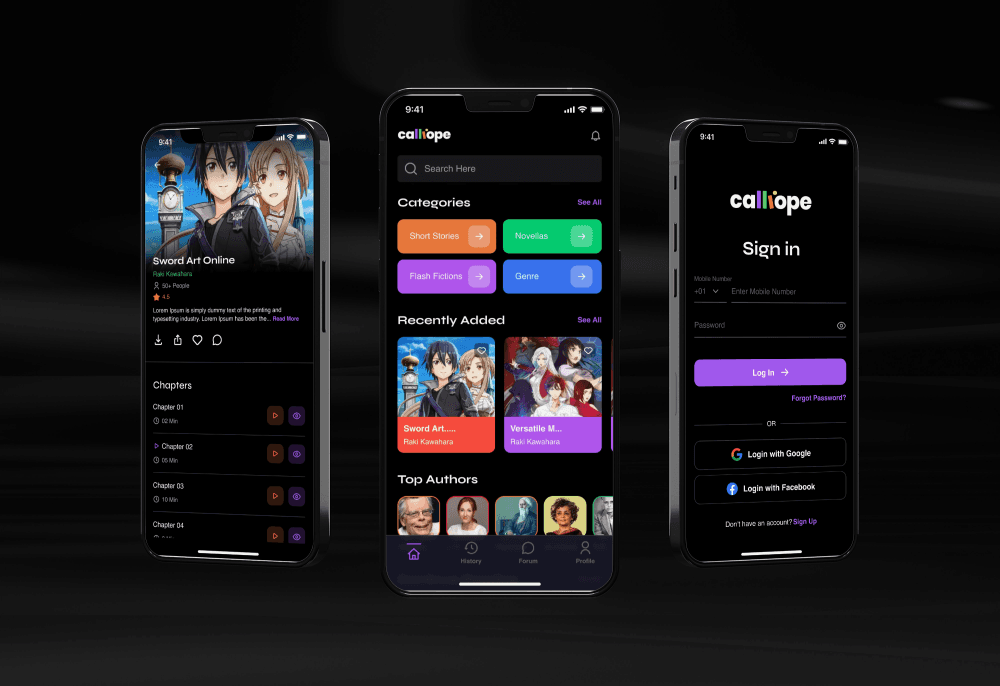
Calliope interactive ebook and social reading application
MEDIA & PUBLISHING

Calliope

An interactive reading experience combining animated ebook content with social elements. VGD’s portfolio lists React Native, Audio AI, and Node.js for the project.

Products like this bring content presentation, navigation, and performance together. Ask us about the engineering decisions relevant to your own media experience.

React NativeAudio AINode.js

Explore more of our featured case studies, live production apps, and technical roadmaps.

Explore Portfolio↗

Know what happens next. And why.

A useful app development process makes decisions visible. At each stage, agree the output, who reviews it, and what allows the project to move forward.

01

Discover the product and its constraints

We discuss users, business objectives, existing systems, budget expectations, and launch dependencies. The output is a shared problem definition and an initial scope. Questions about data access, integrations, and decision ownership are addressed before they delay development.

02

Prototype the critical journeys

We turn the essential workflows into a design that stakeholders can review and representative users can try. This stage exposes confusing steps and missing states while changes remain relatively inexpensive. The approved direction becomes a practical reference for implementation.

03

Build in reviewable increments

Engineering progresses through agreed priorities, with working software used to review progress. We connect mobile screens, backend behavior, and administration features as the product develops. Changes are discussed with their implications for scope, effort, and release timing.

04

Test the conditions users encounter

Testing covers important journeys, supported devices, permissions, interrupted connections, and error recovery. We agree which checks are automated and which require focused manual review. Release decisions should reflect the severity of remaining issues, not merely the number of completed tickets.

05

Prepare, release, and learn

We coordinate release preparation, app store materials, monitoring, and handover within the agreed scope. After launch, product decisions should use customer feedback and observed behavior. A controlled rollout can help identify issues before opening the application to a larger audience.

Make launch a decision. Not a leap of faith.

A completed feature list is only one part of being ready. The team also needs confidence that users can complete the important journeys and someone can respond when they cannot.

Agree acceptance criteria early

Describe what each critical feature must do in observable terms. For a booking flow, that could include availability checks, confirmation, cancellation behavior, and handling a payment that succeeds while the network disconnects. Specific criteria make review more objective and reduce disagreements about whether a feature is finished.

Use realistic examples and include the less convenient cases. An account with no data, an expired session, or an unavailable service should have a deliberate experience rather than an accidental one.

Prepare the people behind the app

Support and operations teams need to understand the product before customers arrive. Decide how an issue is reported, what information is collected, and who can investigate it. Give administrators the access they need without exposing unrelated customer information.

Handover should cover the agreed documentation, environments, deployment process, and outstanding decisions. If a third party operates part of the system, its responsibilities should be visible in the release plan.

Choose meaningful success measures

Select a small number of measures tied to the business objective. A subscription product may focus on activation and continued use. A field application may focus on completed jobs and reduced re-entry of information. Define the events consistently so your team can interpret what happened.

Review these signals alongside user feedback. A number can show that people abandon a workflow, while a conversation or observed session helps explain why. Together, they guide a more useful improvement backlog.

A practical starting point

Before the first public release, walk through one complete customer journey and one operational exception with the people who will own them. Confirm what the user sees, what the system records, and what support can do. This exercise often reveals missing information that a screen-by-screen review overlooks. We can include this readiness review in the delivery scope and use its findings to prioritize launch decisions.

US market focus. Clear delivery arrangements.

VGD is based in India and works with businesses internationally. For US engagements, we agree the collaboration model before development begins.

Working-hour overlap

Your team should know when decisions can be discussed live and when to expect an asynchronous update. We agree meeting windows around your US time zone, project needs, and team availability. Exact overlap belongs in the delivery plan rather than an assumed promise of all-day availability.

Written decisions, concise demonstrations, and a shared backlog keep progress visible between meetings.

Ownership and access

The agreement should define ownership of custom deliverables, treatment of existing components, repository access, and handover responsibilities. We also clarify who controls app store accounts, infrastructure, domains, and third-party subscriptions.

These decisions make maintenance and future transitions easier. They belong at the beginning of the engagement, while everyone can plan around the same expectations.

Choose the engagement model

A defined scope can suit a contained release with stable requirements. An iterative engagement can work better when priorities will change as you learn. A dedicated team may suit a longer roadmap or collaboration with your internal product organization.

When you discuss your project with VGD, bring your decision process and available internal resources as well as the feature list.

Discuss Your Project with VGD ↗

What will your mobile app cost?

The most useful estimate explains what is included, what is assumed, and what could change. A headline price cannot do that on its own.

Estimate the whole product

Mobile app development cost depends on user roles, platform choices, integrations, design depth, data migration, testing, and release requirements. A customer-facing app with a simple workflow is a different engagement from a product that also needs operational tools and several connected systems.

We recommend separating the first release from later phases and identifying external costs explicitly. That gives your team a clearer decision than comparing proposals with different assumptions.

Budget areaWhat to clarify
Discovery & designResearch, prototypes, design system, review rounds.
Application buildPlatforms, roles, features, integrations, admin tools.
Quality & releaseDevice coverage, security review, testing, store preparation.
Running costsHosting, messaging, AI usage, monitoring, maintenance.

A transparent planning example

If a hypothetical project required 800 hours at an assumed blended rate of $50 per hour, the labor subtotal would be $40,000. That is arithmetic for planning—not a VGD quote, a published VGD rate, or a market benchmark. Design changes, third-party fees, taxes, and ongoing operations would need separate treatment.

Use this approach to question an estimate: which work packages contribute the hours, what is excluded, and where is uncertainty highest? The answers are more useful than a price that looks precise without describing the work.

Build a realistic launch plan

Timing depends on scope, review speed, integration readiness, and the people available to deliver the project. A focused first release and a complex enterprise rollout should not share the same schedule. Store review and external approvals can also sit outside the development team’s direct control.

Bring any fixed business deadline to discovery. We can discuss what must be ready, what can follow later, and which dependencies need attention immediately. Request a scope discussion to turn the idea into a phased plan.

Mobile app maintenance services for the next chapter

Launching is the start of operating a product. Mobile app maintenance services can cover defect resolution, dependency updates, operating-system compatibility, performance review, and support for planned releases. The specific coverage and response expectations should be agreed in your support plan.

01Monitor
02Understand
03Improve
04Release
PRODUCT HEALTH

Watch the signals that matter

Track stability, slow journeys, failed actions, and the points where users abandon important tasks. For a booking app, successful bookings matter more than screen views alone. For an internal app, task completion and exception handling may tell you more than daily logins.

StabilityTask completionUser feedback
CONTINUOUS IMPROVEMENT

Improve an existing app without guessing

If you already have a product, begin with an assessment of its code, dependencies, infrastructure, and user feedback. Some problems can be fixed within the current architecture; others need a phased modernization plan. Our software engineering services can support that decision alongside mobile development.

Code healthDependenciesRelease readiness

Separate urgent reliability work from feature expansion. A dependable release process and documented ownership often make future changes easier than a large rewrite undertaken without clear evidence.

Discuss your existing app ↗

How to compare mobile app development companies

Compare mobile app development companies on the work your product actually needs. A convincing portfolio is useful, but it should lead to specific questions about the team, technical decisions, delivery responsibilities, and ongoing support.

01

Ask for relevant work.

Review examples with similar workflows or technical constraints. Clarify what the company delivered and what other partners owned.

✓
02

Test the recommendation.

Ask why the proposed platform suits your application and which requirements could change that recommendation.

✓
03

Compare complete scopes.

Check whether backend development, administration, QA, launch preparation, and handover are included.

✓
04

Understand the working relationship.

Confirm the delivery lead, communication rhythm, review process, and change-management approach.

✓
CHOOSE FOR FIT

If you are searching for the best mobile app development company for your US business, define “best” in terms of fit. The right partner should be able to explain trade-offs in language your product and business teams understand. We welcome that conversation, including the questions that challenge the initial plan.

Let’s discuss your fit ↗

Mobile app development for businesses across the USA

From an East Coast product team to a West Coast startup, choose your state to begin a conversation around your location and project.

We support remote collaboration with businesses in these ten US states and other locations nationwide. The cards represent service coverage, not VGD offices. Each engagement has its own agreed meeting schedule, delivery scope, and communication plan.

Collaboration Focus

Building an app in New York?

Plan a mobile product with your New York team, with an agreed Eastern Time meeting window and written decisions between reviews.

Discuss your New York project ↗

Not in one of these states? Share your location in the form. We will discuss working-hour overlap and the delivery arrangements your team needs.

Frequently Asked Questions

They typically include discovery, UI/UX design, mobile engineering, backend integration, testing, release preparation, and an agreed support scope. Not every proposal includes all of these. Ask whether administration tools, data migration, app store materials, and third-party fees are covered. VGD connects these decisions through its mobile app development services, with deliverables defined for your project.
Choose by product fit, relevant delivery experience, communication, and scope clarity. Ask how the team would reduce your first release to the workflow that tests your business idea. Review working products and clarify who handles the backend, design, and QA. Our MVP development approach is a useful starting point for discussing those priorities without committing to every future feature.
VGD Technologies is based in India and provides services to businesses internationally, including US-focused engagements. This page describes service coverage; it does not claim a US office. Working-hour overlap, communication channels, delivery responsibilities, and commercial arrangements are agreed for each project. Contact VGD with your location and preferred collaboration model so we can discuss a workable arrangement.
There is no reliable single price without a defined scope. Cost depends on features, roles, integrations, design complexity, platform approach, and testing needs. Two native applications may require a different effort profile from a shared-code solution. Review the cost and scope section, then request an estimate that separates initial delivery from hosting, third-party services, maintenance, and future changes.
The timeline depends on the first-release scope, team capacity, feedback speed, and external dependencies. A clear MVP with ready APIs differs substantially from a product requiring new backend systems or complex integrations. We define milestones after discovery and identify approval dependencies. Our MVP development services can help separate launch essentials from the broader roadmap before a delivery schedule is agreed.
Choose based on the app’s requirements and maintenance context. Native development can suit deep platform integration; Flutter or React Native can suit shared functionality across iOS and Android. Check difficult integrations, accessibility, performance expectations, and available team skills before deciding. The platform comparison outlines the trade-offs, while our custom iOS app development services and Android services explain the native paths.
Yes, these components can be included in the engagement. A mobile product often needs administration, account management, reporting, and integrations to operate effectively. Define these alongside the mobile scope so responsibilities are clear. Our API development and integration services and custom software development can support the systems behind the app rather than leaving them as a separate, unresolved dependency.
Often, yes, after reviewing the existing architecture, available data, and intended use case. Start with a defined task such as approved-content search, document assistance, or support triage. Assess permissions, answer quality, latency, and operating cost before release. Our generative AI services can help scope the feature and its evaluation approach. AI should improve a user workflow, not make the application harder to trust.
Yes, integration can be scoped where the relevant systems provide suitable access. We review documentation, authentication, data ownership, rate limits, and error handling before committing to the approach. Some legacy systems require additional integration work. Explore our API integration capabilities and share the systems involved, including who controls access and whether a testing environment is available.
We begin with data flows, user permissions, threat scenarios, and the controls the project requires. Technical work can include access restrictions, secure storage, logging, and integration safeguards. Applicable regulatory obligations and independent reviews must be established with the responsible specialists. Explore our healthcare and fintech services for the broader discussion. We do not treat using a framework or encryption as proof of compliance.
Ownership and access should be explicit in your contract. Agree the treatment of custom code, existing components, third-party licenses, repositories, cloud resources, and developer accounts before work starts. Your team should understand what will be handed over and how it can operate the product. Raise these points during your project consultation so the commercial agreement and technical setup support the same ownership expectations.
A dedicated-team engagement can be discussed when your organization already has product direction or engineering leadership. Define the skills needed, onboarding responsibilities, review process, and expected working-hour overlap. Also clarify who owns architecture, QA, and release decisions. Share your current stack and delivery bottleneck through the project form; that provides a better starting point than requesting a developer role without explaining the work.
Post-launch support and maintenance can be agreed as part of the engagement. Coverage may include bug fixes, compatibility updates, dependency management, monitoring review, and release support. Response times and feature development should be defined separately rather than assumed. Read our mobile app maintenance section and discuss expected usage, business-critical hours, and internal support responsibilities before selecting the ongoing arrangement.
Yes, an assessment can identify whether targeted improvements, phased modernization, or a rebuild is the sensible option. We examine architecture, code health, dependencies, infrastructure, and user-facing problems. The recommendation should connect technical findings to business impact. Our custom software engineering services can support that review. A rewrite is not automatically the fastest or least expensive way to improve reliability.
Compare relevant work, scope completeness, decision ownership, testing, and the support model. Ask each provider to explain the main delivery risks and how they would address them. Use the same requirements so proposals are comparable. Explore VGD’s published work, then ask which experience is relevant to your product. A cheaper quote may simply exclude work another proposal includes.
Bring the intended users, the problem to solve, essential workflows, existing systems, and any launch deadline. Include budget expectations and examples of experiences you like, but you do not need a finished specification. We can help shape the scope. Use the project inquiry form to summarize what you know and identify the decisions you want help making.

Your next app starts
with a clearer plan.

Bring us the idea, the unfinished product, or the workflow that needs to improve. We will discuss the right first release, the technical dependencies, and the delivery approach that fits your business.

Discuss your app with VGD

* Takes less than 60 seconds.