MQTT vs. OPC UA: Choosing the Right Protocol for Industrial IoT
MQTT and OPC UA are not competitors — they solve overlapping but distinct problems. Here is the engineering view of when to choose each.

MQTT and OPC UA are both excellent. They are also routinely compared as if they were rivals, which they are not. Understanding what each one is actually good at is the difference between a clean industrial data architecture and a costly retrofit.
#1What each protocol is genuinely for
MQTT is a lightweight pub-sub transport. It is excellent at moving data efficiently across constrained networks, but it knows nothing about the meaning of that data. OPC UA is a richer information modelling protocol with a strong type system, security, and discovery built in.
#2Where MQTT (and Sparkplug) wins
MQTT shines for high-cardinality, lightweight telemetry where the cost of encoding semantics is more than the value gained. Paired with Sparkplug, it gains structure and birth-death notifications without losing efficiency.
#3Where OPC UA wins
OPC UA dominates where richly typed information models and secure machine-to-machine interaction are the priority — between PLCs, between MES and SCADA layers, and in environments that demand certified interoperability.
#4Why most factories end up hybrid
We typically deploy OPC UA between control systems and the unified namespace at the edge, and MQTT (with Sparkplug B) for moving aggregated telemetry to the cloud. The edge broker becomes the translator and the policy point.
The takeaway
Stop treating MQTT vs. OPC UA as an either/or. Use OPC UA close to the machine, MQTT to scale up and out, and a strong edge layer to mediate between them.
Frequently asked questions
- Is Sparkplug B mandatory if we use MQTT?
- Not mandatory, but strongly recommended for industrial deployments because it solves session state and message structure problems that vanilla MQTT leaves to the integrator.
- Can OPC UA run over the cloud?
- Yes, OPC UA has been extended for cloud transport, but for high-cardinality telemetry MQTT or Kafka usually remain more efficient.
Similar articles
 Manufacturing & Industry 4.0
The IT/OT Convergence: How to Safely Connect Your Factory to the Cloud
Connecting operational technology to enterprise IT unlocks enormous value — and equally enormous risk. Here is how to do it without breaking either side.
 Manufacturing & Industry 4.0
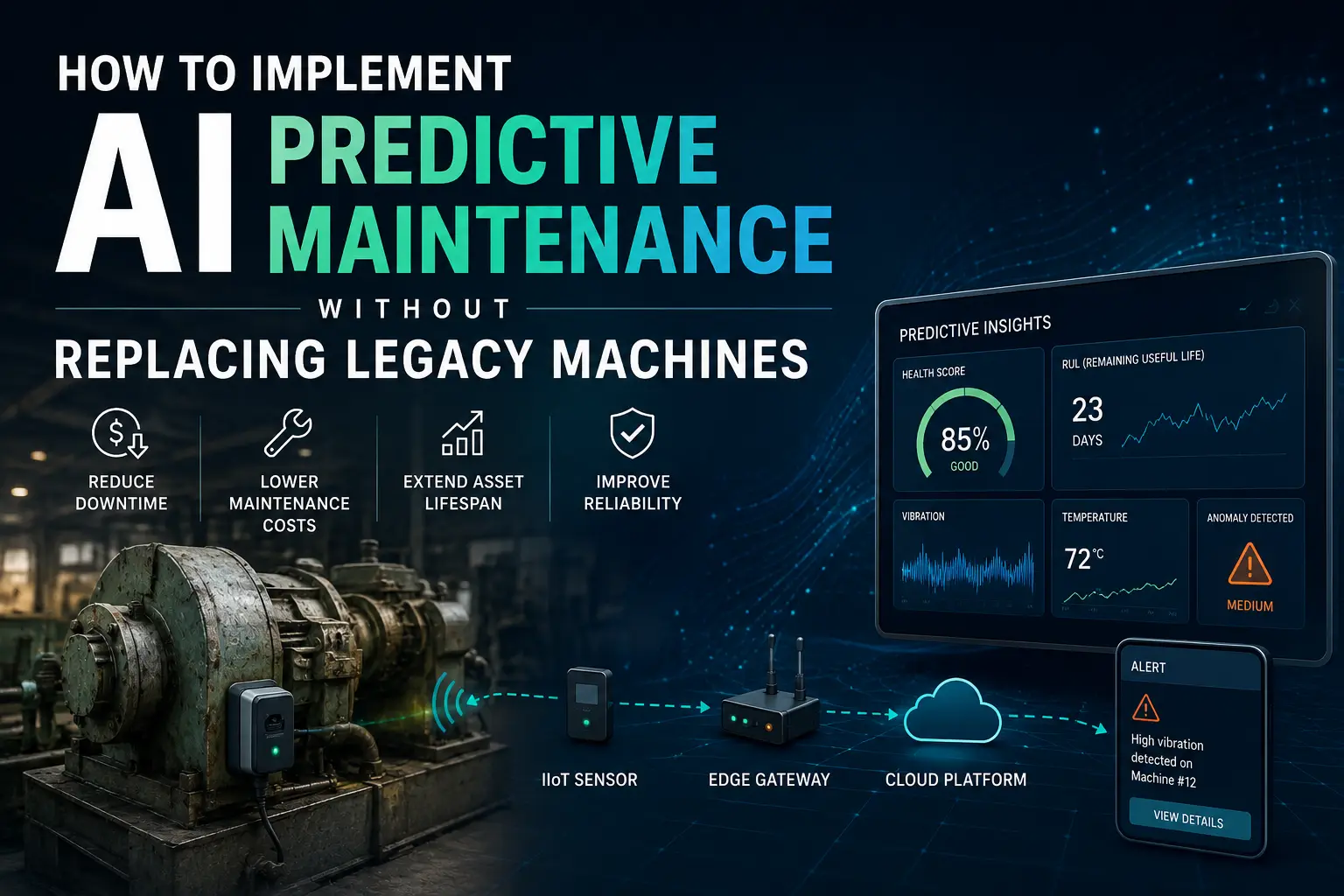
How to Implement AI Predictive Maintenance Without Replacing Legacy Machines
Predictive maintenance is one of the highest-ROI applications of AI in manufacturing — and most factories have the data already, even on equipment they cannot replace.
 Logistics & Transportation
The ROI of IoT: Turning Your Fleet Telematics Into Actionable Data
Telematics hardware is rarely the bottleneck. Most fleets sit on years of telemetry without turning it into operating leverage. Here is how to fix that.